Identity Before the Internet
Imagine your life without the internet, where, earlier, before constant notification timelines in profiles, people used to engage and communicate with other people. Identity in traditional times was shaped slowly by family education, neighbourhood, and workplace. Feedback comes from people who actually know who you are, not from the metrics. Who you were yesterday was usually who you are today, and identity feels grounded and relatively private. This discussion is inevitable as the internet today has both advantages and limitations at the same time.
The Rise of Digital Identity Psychology
Now, in the rising scenario today, identity not only just exists; it is curated. Every profile picture, comment, and caption becomes a small act of self-definition. From a digital identity psychology perspective, this makes perfect sense, where humans are wired to seek approval, and the internet offers instant validation to people. Over time, we may start adjusting our behaviour not to reflect who we are but to match others’ perceptions. Ask yourself honestly, are you expressing yourself online or optimising yourself?
Internet and Identity Formation in Online Spaces
The Internet and identity formation are not a one-time event; it is an ongoing experiment where online space allows people to try out opinions and personalities with very little risk. For the majority of people, shy individuals find confidence through the internet, and marginalised voices find community. But this constant experiment also means identity is never finished with the trend in the social media platform or viral moment that creates pressure on you to adapt and evolve yourself. Identity doesn’t mean something you maintain, but just something you live.
Online Self vs Real Self
Here is the most uncomfortable question: how different is your online self from your actual perspective? The online version often looks more confident and happier, but the real self deals with doubt, exhaustion, and contradiction. The gap is not always fake, but it’s often selective and varies from one person to another. While maintaining the online self becomes a performance, it can quietly drain away the emotional energy. The more applause the online version receives, the harder it can feel to admit that the offline version is struggling.
Living With Multiple Digital Selves
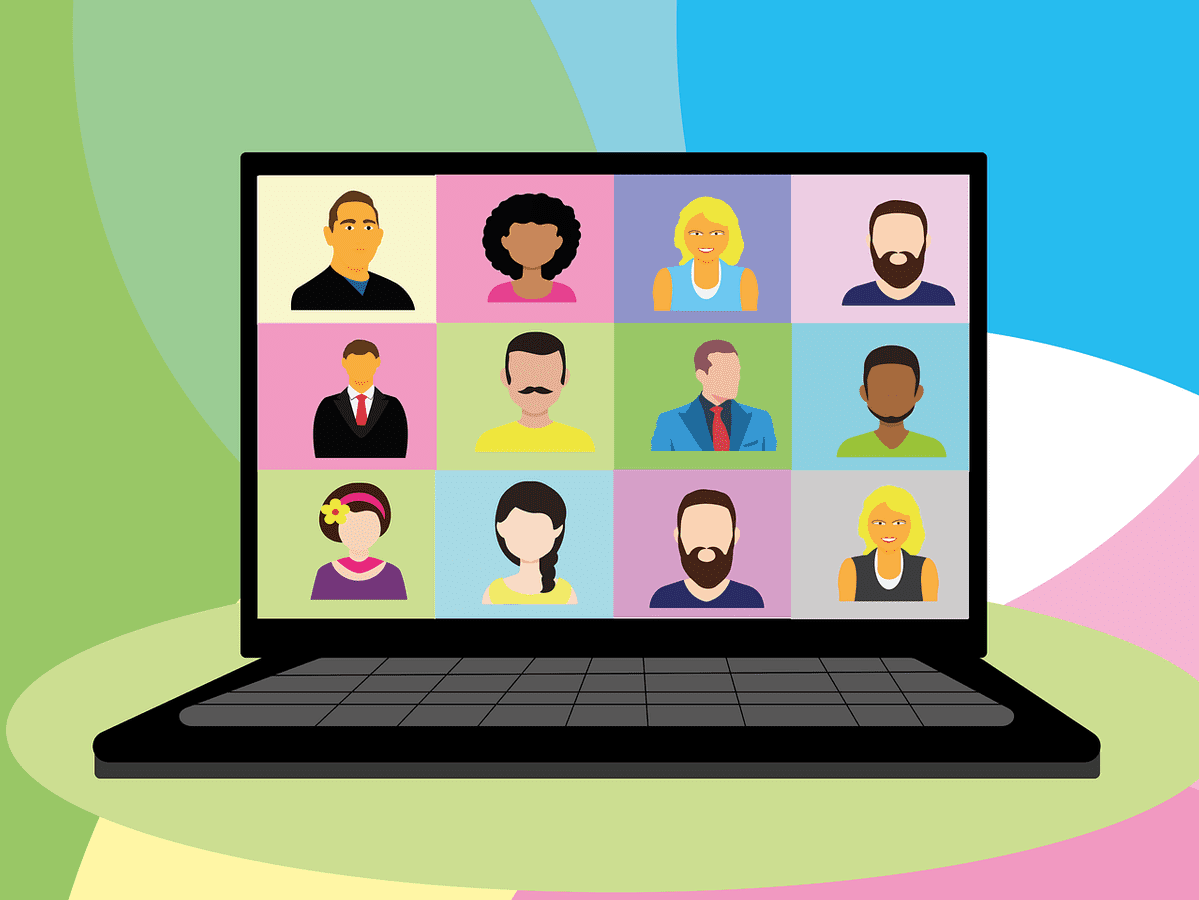
The fact that people can have several digital identities and do so nowadays has become a normalised trend in the modern internet setting. Instead of one coherent digital identity, most users develop different types of profiles on different platforms, being professional in some, jovial in others, intensely sincere in other anonymous groups, and wary of neutrality in others. Though this multiplicity holds a possible empowering power, it also brings about the disintegration of the self. As users switch personas based on the platform conventions, they are left asking which of them is the most genuine depiction of the person. The main danger is not the presence of several identities as such, but the fact that the main values around which they are united are worn off. With the rise of internet sensations, cybersecurity crimes are also increasing rapidly.
Algorithms and the Shaping of Who You Become
Algorithm curation in the formation of the individual identity has often been underestimated. User interactions such as likes, follows, and dwell time are tracked by algorithms, which generate content based on hypothetical preferences. As a result, such mechanisms end up strengthening the specific interests, belief systems, and even the state of affection through a series of exposure cycles. Even though this kind of reinforcement will foster a strong feeling of belonging, it can also be used to close the identity lines. Slowly, without conscious realisation, users can be increasingly predictable, polarising, and habitual as opposed to volitional choices.
Represented constantly, identity is placed in a state of constant scrutiny. The need to be relevant, authentic, and the lack of an error can cause identity fatigue. Despite the fact that the internet initially encouraged the freedom of expression, most users today feel that they are being limited by the fact that their digital traces cannot be undone. Constant exposure thus inhibits the time to do some personal inward growth or non-accountable re-evaluation.
Reclaiming Identity in a Digital World
It would be wrong to say that the internet has destroyed human identity; it has increased its plurality. Modern identity is in flux, expressive and highly mediated through technology. Alignment is thus the main task. It needs to be established whether the online self is a loyal copy of the offline one, or it serves as a protective mask that is still to be deactivated. Leaving without logging out is not enough to address the problem, but purposeful thinking will provide a promising route. In an environment where total surveillance is the order of the day, the greatest thing that can be done is to consciously seek self-knowledge outside the mediated interface.