
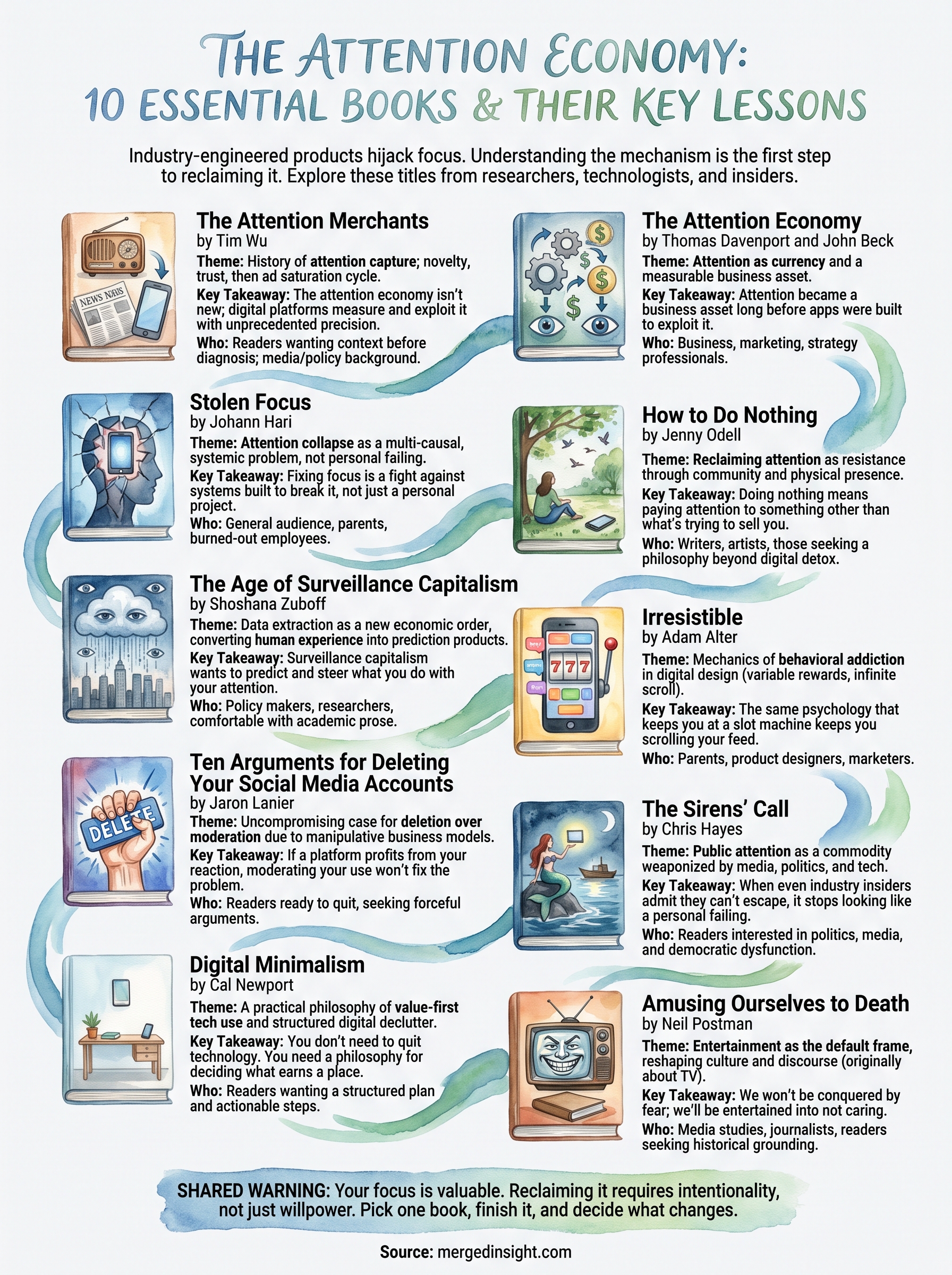
You feel it every time you pick up your phone and lose forty minutes without meaning to. That’s not an accident or a personal failing. It’s the result of billion-dollar industries engineering products to hijack your focus, and understanding how that works starts with finding the right attention economy book to explain it.
If you’re searching for books about the attention economy, you want titles that actually hold up, not a random algorithm-generated list padded with filler. The books below come from researchers, technologists, and former insiders who’ve studied how platforms monetize your time and what it’s doing to your brain, your relationships, and your ability to think clearly.
This list covers ten of the strongest attention economy books available right now, ranging from behavioral science deep dives to firsthand accounts from people who built the systems they now warn you about. Each entry includes what the book covers, who it’s best suited for, and why it earned a spot here, so you can pick the one that fits what you’re trying to understand.
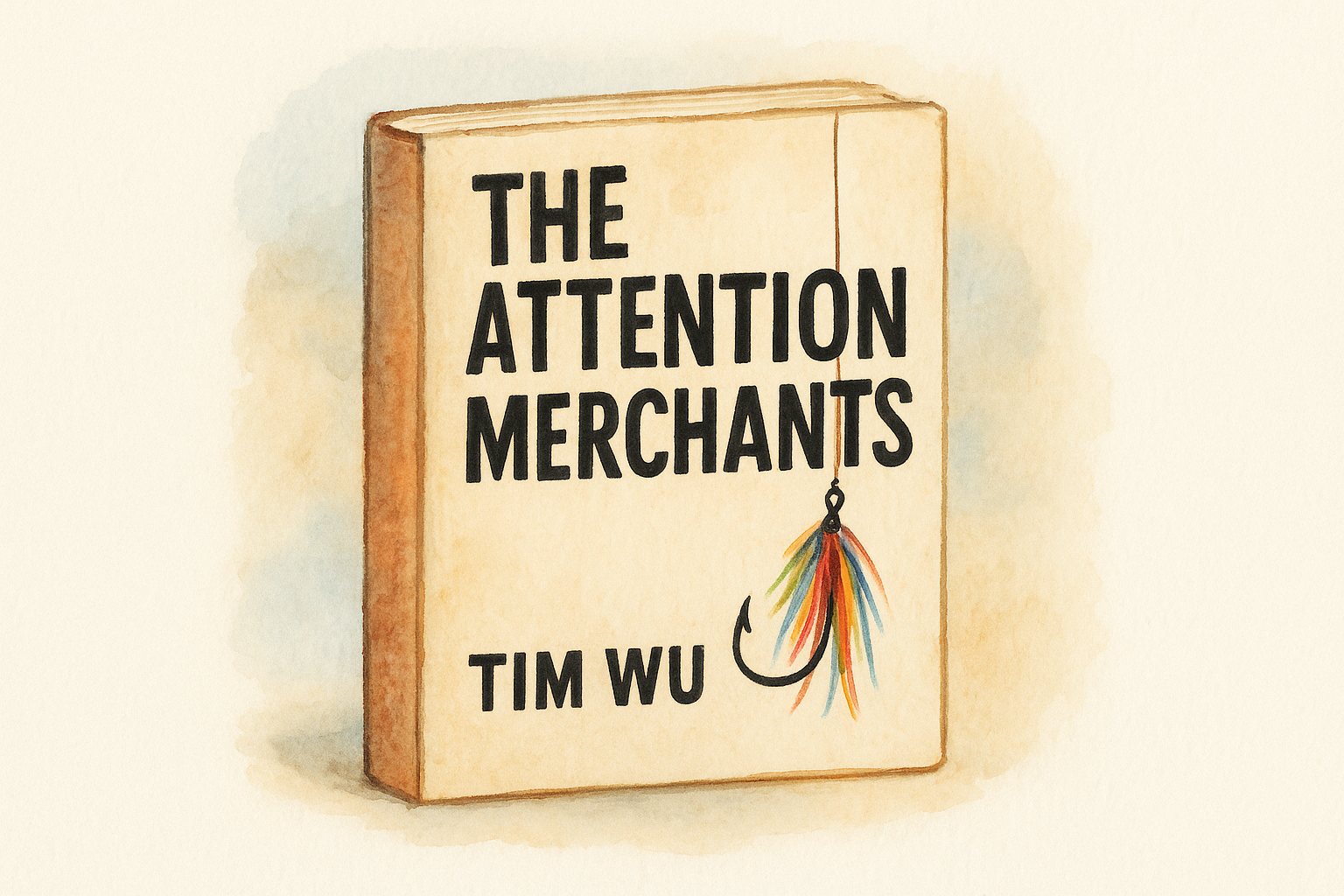
1. The Attention Merchants by Tim Wu
Tim Wu coined the phrase “attention merchants” before most people had a name for what platforms were doing to them, and this 2016 book remains one of the most complete histories of the industry. Wu is a law professor and former FTC advisor who also popularized the term “net neutrality,” so he brings a policy expert’s rigor to a topic most writers treat as purely psychological. If you want a single attention economy book that traces the whole arc from newspapers to smartphones, this is the one to start with.
What the book is about
Wu walks through more than a century of attention capture, starting with penny newspapers in the 1830s and moving through radio, television, direct mail, and eventually the internet. He shows that harvesting human attention for resale to advertisers isn’t a Silicon Valley invention. It’s a business model that’s been refined for two hundred years, and every new medium repeats the same pattern: novelty, trust, then saturation with ads. The book’s real contribution is showing how each wave of technology eventually triggers a backlash, which sets up his warning about where digital platforms are headed.
Key ideas
Wu organizes the book around a few recurring patterns that show up across every era he covers:
- The attention harvest cycle: a new medium earns trust with genuine content, then gradually fills that trust with advertising until audiences push back.
- Disenchantment: audiences eventually grow tired of being sold to and seek out ad-free or less commercial alternatives, which then start the cycle over.
- Total surveillance as the endgame: Wu argues that unlike radio or TV, digital platforms can track and target individuals so precisely that the old cycle of trust and backlash may not apply the same way.
The attention economy isn’t new. What’s new is how precisely today’s platforms can measure and exploit it.
This historical framing matters because it reframes the current moment. Smartphone addiction and social media manipulation aren’t glitches in an otherwise healthy system. They’re the latest chapter in a business model that has always treated your focus as inventory.
Who should read it
Readers who want context before diagnosis will get the most from this one. If you’ve already read newer titles about phone addiction and want to understand the deeper history behind the pattern, Wu’s book fills that gap better than anything else on this list. It also suits anyone with a background in media, journalism, marketing, or policy, since Wu writes with an eye toward regulation and public interest rather than just personal habits. People looking purely for practical fixes to their own screen time should probably start with a more prescriptive title further down this list, since Wu is more historian than self-help author. But for anyone who wants to understand why the attention economy exists in the first place, before deciding what to do about it, this is required reading. At roughly 400 pages, it’s a substantial commitment, but Wu’s journalistic style keeps the chapters moving.
2. The Attention Economy by Thomas Davenport and John Beck
Published in 2001, this book actually predates the smartphone era and still gets cited constantly in books on attention economy because it laid the groundwork for treating attention as a measurable economic resource. Davenport is a management professor and Beck ran a research center on the topic, so the book reads more like a business strategy manual than a cultural critique. It’s less about outrage and more about mapping a market that most executives hadn’t named yet.
What the book is about
Davenport and Beck argue that as information became abundant and nearly free, human attention became the actual scarce resource companies needed to compete for. They break down how businesses, media outlets, and advertisers were starting to design products specifically to capture and hold focus, years before Facebook or the iPhone existed. The authors use case studies from advertising, television, and early internet companies to show attention functioning like any other commodity, something that can be measured, bought, and sold.
Key ideas
The book’s central framework treats attention with the same seriousness economists apply to labor or capital:
- Attention as currency: companies compete on their ability to capture and retain focus, not just on product quality.
- Measurement matters: the authors push for tracking attention the way businesses track revenue, since what gets measured gets managed.
- Early warning signs: they predicted the information overload that later became the norm, well before smartphones made it constant.
Attention became a business asset long before anyone built an app to exploit it.
Who should read it
This one suits readers with a business, marketing, or strategy background more than casual readers chasing self-help fixes. Anyone building a company, running a media outlet, or working in advertising will find its frameworks genuinely useful for understanding how attention gets allocated and monetized. If you’re mainly interested in the psychological or societal fallout, skip ahead to later entries on this list. But if you want the foundational business case that explains why every platform now optimizes for engagement, this book earned its spot among the essential attention economy books.
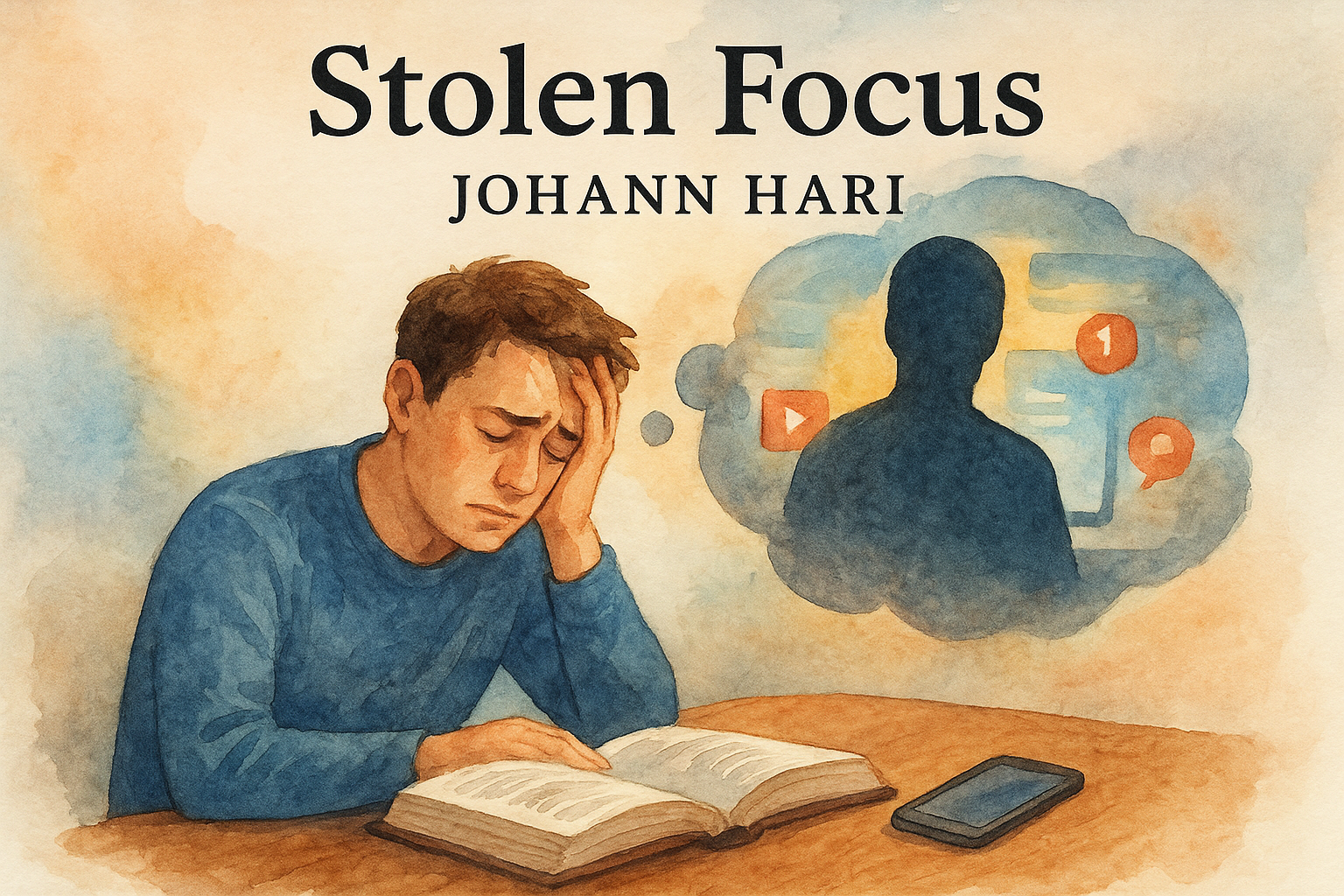
3. Stolen Focus by Johann Hari
Johann Hari spent three years interviewing neuroscientists, tech insiders, and ordinary people struggling to concentrate before writing this 2022 book, and it reads more like investigative journalism than a lecture. Hari also wrote Chasing the Scream and Lost Connections, so he’s built a career explaining big societal problems through personal stories rather than dry statistics. Among books about attention economy written for a general audience, this one hits the widest readership because Hari makes the science feel personal instead of academic.
What the book is about
Stolen Focus argues that your inability to concentrate isn’t a personal failing or a willpower problem. Hari travels the world talking to researchers studying sleep deprivation, diet, pollution, and workplace design, building a case that attention collapse stems from a dozen interlocking causes, with tech platforms as the most visible but not the only culprit. He even undergoes a self-imposed digital detox partway through, which grounds the research in lived experience rather than pure theory, much like our own look at how the smartphone fractured our reality.
Key ideas
Hari’s central claims span several disciplines:
- Multi-causal breakdown: declining focus results from diet, sleep loss, stress, and surveillance capitalism working together, not any single cause.
- Systemic solutions over willpower: Hari argues that individual habit changes won’t fix a problem engineered at the corporate level.
- Collective action matters: he pushes for regulation and workplace reform alongside personal boundaries.
Fixing your focus isn’t a personal project. It’s a fight against systems built to break it.
Who should read it
General readers who want an accessible, story-driven entry point will connect with this book faster than with denser academic titles. Parents worried about kids’ screen time, employees burned out by constant notifications, and anyone who’s tried and failed at a digital detox will recognize themselves in Hari’s interviews. Skip it if you want hard data over narrative, since Hari favors storytelling over spreadsheets.
4. How to Do Nothing by Jenny Odell
Jenny Odell wrote this 2019 book as an artist and Stanford lecturer, not a tech critic, and that background shows in how differently she approaches the topic. Rather than cataloging manipulation tactics, she asks what a genuine alternative to constant engagement actually looks like. Among attention economy books, this one stands out for refusing to treat the problem as purely technological, framing it instead as a question about how you spend your one life.
What the book is about
Odell builds her argument around bird watching, public parks, and the history of resistance movements that rejected productivity culture long before smartphones existed. She’s not arguing for a digital detox or a return to flip phones. Instead, she makes a case for reclaiming attention as a form of resistance, something you direct toward your immediate surroundings, community, and the natural world rather than toward whatever an app decides to show you next.
Key ideas
The book circles a few connected arguments:
- Attention as a place, not a habit: Odell treats sustained focus on your physical surroundings as an antidote to platforms designed for constant switching.
- Rejecting the productivity frame: she pushes back on the idea that time away from screens needs to be “optimized” into something else useful, a habit hustle culture keeps reinforcing.
- Community over individual fixes: real attention restoration happens through relationships and shared physical space, not personal willpower alone.
Doing nothing, in Odell’s sense, means paying attention to something other than what’s trying to sell you.
Who should read it
This book suits readers who’ve already tried quitting social media and found the advice unsatisfying, since Odell offers a philosophy rather than a checklist. Writers, artists, and anyone drawn to slower, more contemplative nonfiction will connect with her prose style more than readers hoping for research citations or step-by-step plans. Those wanting concrete tactics should look toward Cal Newport’s entry later in this list instead.
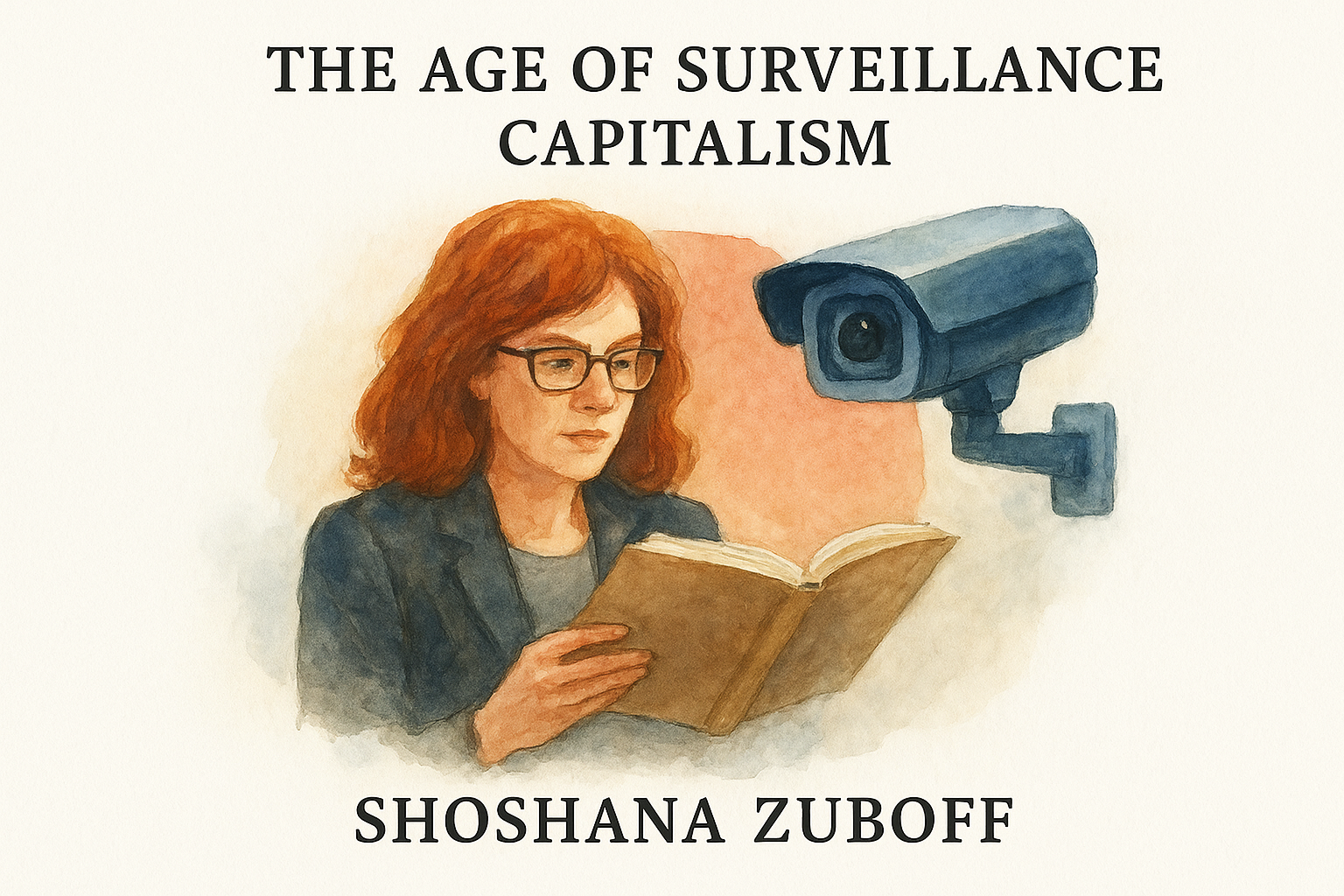
5. The Age of Surveillance Capitalism by Shoshana Zuboff
Shoshana Zuboff spent decades as a Harvard Business School professor before publishing this 700-page 2019 book, and its scope reflects that academic weight. She coined the term “surveillance capitalism” to describe a business model she argues is fundamentally new, not just an extension of advertising. Among books on attention economy, this is the densest and most theoretically ambitious, treating data extraction as a distinct economic order rather than a side effect of tech growth.
What the book is about
Zuboff traces how Google discovered that behavioral data left over from searches, what she calls “data exhaust,” could be repackaged and sold to predict and influence future behavior. That discovery, she argues, became the template every major platform now follows. The book builds a legal and economic case that companies aren’t just capturing attention anymore. They’re claiming ownership over human experience itself, converting your clicks, location, and even mood into raw material for big tech prediction products sold to advertisers and, increasingly, anyone willing to pay.
Key ideas
Zuboff’s argument rests on a few core claims that run through the entire book:
- Behavioral surplus: platforms collect far more data than needed to improve their own services, then sell the excess to predict and shape future behavior.
- Prediction products: companies compete not on better service but on how accurately they can forecast what you’ll do next.
- A new form of power: Zuboff argues this represents an unprecedented concentration of control over human behavior, distinct from older forms of corporate power.
Surveillance capitalism doesn’t just want your attention. It wants to predict and steer what you do with it.
Who should read it
Readers comfortable with academic prose and willing to invest serious time will get the most out of this one. Policy makers, researchers, and anyone building a legal or ethical case against data harvesting will find Zuboff’s framework indispensable. Casual readers looking for a quicker, more narrative read should consider Hari’s or Alter’s books instead, since this one demands patience but rewards it with genuine intellectual heft.
6. Irresistible by Adam Alter
Adam Alter teaches marketing and psychology at NYU, and this 2017 book applies behavioral science directly to the products you use every day. He’s less interested in politics or policy than Wu or Zuboff and more focused on the mechanics of behavioral addiction, the specific design tricks that make apps and games so hard to put down. Among attention economy books, this one reads closest to a psychology text translated for a general audience.
What the book is about
Alter argues that addiction has moved beyond substances into experiences, and he backs that claim with research on slot machines, video games, email, and social media feeds. He interviews designers who built these systems and walks through the specific mechanics, like variable rewards and infinite scroll, that show how persuasive digital design manipulates behavior until certain products become nearly impossible to stop using. The book also covers how these same techniques get applied to children’s apps and educational software, which raises the stakes considerably.
Key ideas
Alter builds his case around a handful of core mechanisms:
- Variable rewards: unpredictable payoffs, like likes or notifications, trigger the same dopamine response as gambling.
- Goals and feedback loops: apps track progress obsessively because visible metrics keep users returning.
- Escalation and difficulty curves: games and platforms constantly adjust to keep you right at the edge of frustration and reward.
The same psychology that keeps you at a slot machine keeps you scrolling your feed.
Who should read it
Parents worried about kids’ screen time will find this book especially useful, since Alter spends real space on how design techniques target younger users. Product managers, designers, and marketers curious about the ethics of their own work should read it too, since Alter names the specific mechanisms they may already be using. Readers wanting historical or economic context should look elsewhere on this list, since Alter stays focused on individual psychology rather than industry-wide patterns. For anyone who wants a clear-eyed explanation of why certain apps feel impossible to quit, this book delivers it without much filler.
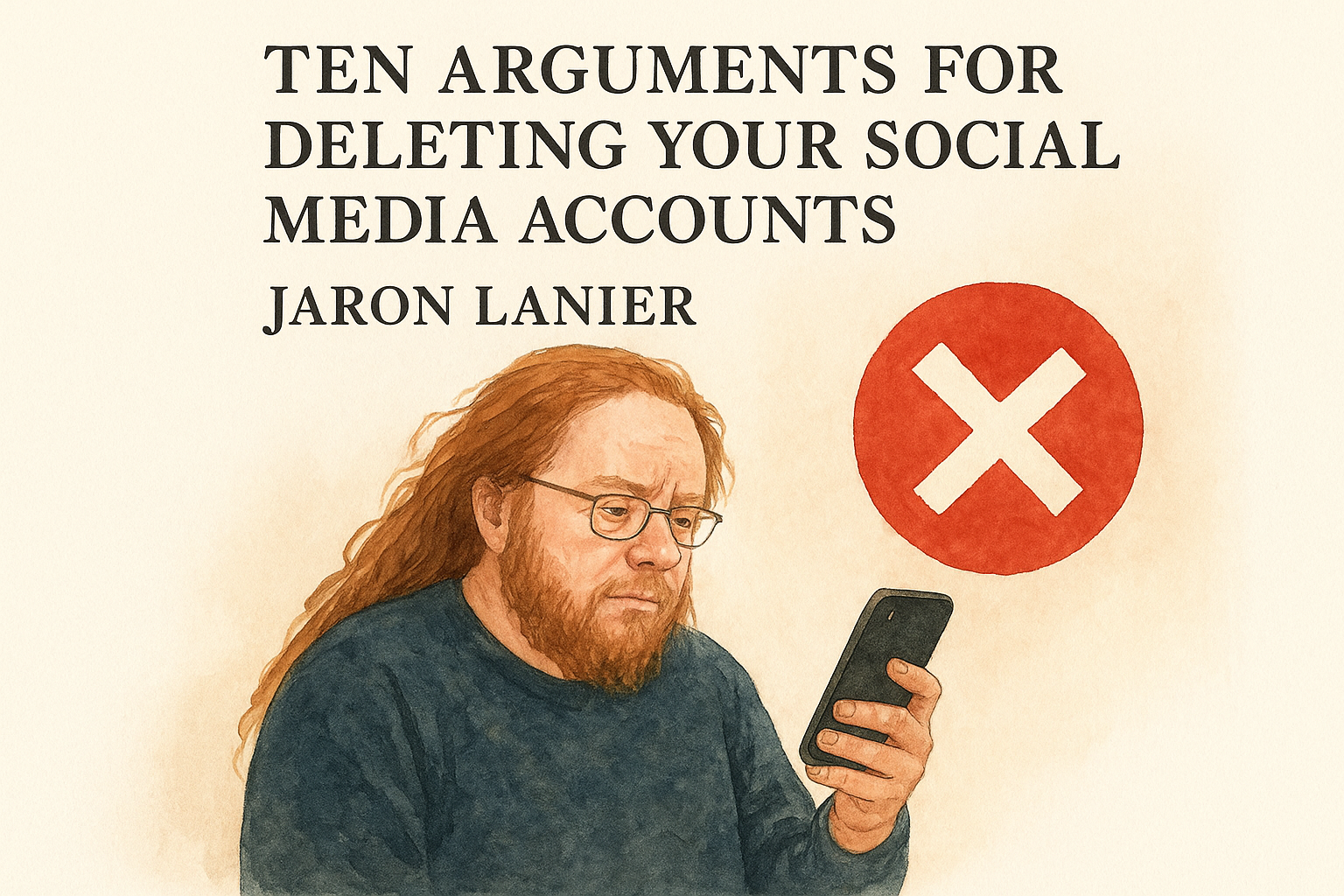
7. Ten Arguments for Deleting Your Social Media Accounts by Jaron Lanier
Jaron Lanier helped invent virtual reality and worked inside Silicon Valley for decades before writing this blunt 2018 manifesto. Unlike most attention economy books, this one doesn’t ask you to moderate your habits. It asks you to quit outright, and Lanier’s insider credibility gives that demand real weight instead of sounding like a tech skeptic shouting from outside the industry.
What the book is about
Lanier structures the book as ten short, escalating arguments, each building the case that social media has become incompatible with a functioning mind and a functioning society. He draws on his own experience building tech products to explain exactly how behavior modification gets engineered into feeds, and he doesn’t soften the diagnosis. Free platforms, he argues, survive by manipulating users, so the only real fix is leaving them behind rather than adjusting your notification settings.
Key ideas
A few arguments carry the most weight across the book’s short chapters:
- You are the product being sold: free platforms fund themselves by manipulating your behavior for advertisers, not by serving you.
- Algorithms reward outrage: engagement-based ranking systems amplify anger and fear because those emotions hold attention longer than calm ones, which is how the algorithmic feed rewires human intent.
- Deletion beats moderation: Lanier argues that partial fixes fail because the manipulation is built into the business model itself, not a few bad features.
If a platform profits from your reaction, moderating your use of it won’t fix the underlying problem.
Who should read it
Readers who want a short, forceful read will finish this one in an afternoon, since it runs under 150 pages and skips academic throat-clearing entirely. Anyone already convinced that social media is harming them but looking for the final push to actually delete their accounts will find Lanier’s directness persuasive in a way gentler books aren’t. Skip it if you want nuance or a defense of moderate use, since Lanier isn’t interested in middle ground. But if you want the single most uncompromising entry among attention economy books, this is it.
8. The Sirens’ Call by Chris Hayes
Chris Hayes hosts a nightly cable news show, so he’s spent years competing directly for your attention inside the very machine he critiques in this 2025 book. That vantage point sets his entry apart from academics and ex-insiders alike. Hayes writes as someone who profits from your focus every night and still finds the system alarming enough to warn you about it, which gives this attention economy book a rare mix of candor and self-implication.
What the book is about
Hayes argues that attention has become the resource capitalism competes hardest to extract, more valuable now than oil or data alone, because everything else depends on getting it first. Drawing on mythology, he compares the modern feed to the sirens from Homer’s Odyssey, a pull so strong that resisting it takes more than willpower. Rather than blaming individual users, he traces how media, politics, and tech companies all learned to weaponize the same psychological triggers, turning public attention into a commodity that shapes elections, news cycles, and daily mood alike, a shift visible in the crumbling fortress of legacy media.
Key ideas
Hayes builds his argument around a few connected claims:
- Attention as the final scarce resource: once information became infinite, capturing focus became the actual competition, more than any product or service.
- Politics runs on the same mechanics: outrage and spectacle spread because they hold attention longer than nuance, reshaping how campaigns and news outlets operate.
- Complicity from the inside: Hayes doesn’t exempt himself, admitting his own show depends on the tactics he criticizes.
When even the people running the attention machine admit they can’t fully escape it, the problem stops looking like a personal failing.
Who should read it
Readers interested in politics, media, and how the news cycle got so frantic will find this one especially sharp, since Hayes connects attention capture directly to democratic dysfunction. Anyone who works in media or has wondered why outrage travels faster than facts should read it for the inside perspective, then look at why doomscrolling is so addictive. Skip it if you want a self-help guide to fixing your own habits, since Hayes stays focused on the bigger structural picture rather than personal fixes.
9. Digital Minimalism by Cal Newport
Cal Newport is a computer science professor at Georgetown who’s spent years studying focus and productivity, and this 2019 book applies that lens directly to smartphones and social media. Unlike Lanier’s all-or-nothing manifesto, Newport builds a philosophy for using technology deliberately rather than abandoning it entirely. Among attention economy books, this one reads as the most actionable, less concerned with diagnosing the industry than with giving you a concrete plan to reclaim your time.
What the book is about
Newport introduces digital minimalism as a philosophy of technology use where you start from your values, then choose tools that serve them, rather than adopting every app by default and hoping for the best. He centers the book on a 30-day digital declutter, a structured break from optional technologies followed by a deliberate, selective return. The approach borrows from minimalist living generally, applying the same logic of intentional subtraction to apps and notifications instead of physical possessions.
Key ideas
Newport organizes his argument around a few practical commitments:
- Value-first tech use: only keep tools that actively support something you care about, and drop the rest without guilt.
- The 30-day declutter: a full reset creates the clarity needed to judge which apps actually deserve a place back in your life.
- Solitude deprivation: Newport argues constant connectivity has eliminated the unstructured alone time people need to think clearly.
You don’t need to quit technology. You need a philosophy for deciding what earns a place in your life.
Who should read it
Readers who want a structured plan rather than a diagnosis will get the most mileage here. Professionals juggling notifications all day, students prone to endless scrolling, and anyone who’s tried quitting cold turkey and failed should start with Newport’s declutter method. Those seeking cultural or historical analysis should look elsewhere on this list, since Newport stays practical throughout.
10. Amusing Ourselves to Death by Neil Postman
Neil Postman published this book in 1985, decades before smartphones existed, yet it keeps showing up on every serious list of attention economy books because his warning about television predicted the internet almost perfectly. Postman taught media ecology at NYU, and his central worry wasn’t propaganda or misinformation. It was entertainment itself, the way a medium built for spectacle quietly reshapes what a culture considers worth thinking about. Reading it now feels less like history and more like a preview.
What the book is about
Postman contrasts two dystopias, George Orwell’s world of censorship and Aldous Huxley’s world of distraction, and argues America was sliding toward Huxley’s version. Television, he claims, doesn’t inform or educate so much as it trains audiences to expect everything, including news, politics, and religion, packaged as entertainment, which is where today’s entertainment exhaustion comes from. Once that expectation takes hold, serious discourse struggles to survive because anything slow, complex, or uncomfortable simply can’t compete for airtime.
Key ideas
A few arguments anchor the entire book:
- Medium shapes message: the format of a medium dictates what kind of content and thought it can carry, regardless of intent.
- Entertainment as the default frame: once a culture expects everything delivered as spectacle, substantive debate gets treated as boring rather than important.
- Huxley over Orwell: Postman argues people voluntarily surrender their attention to pleasure rather than having it forced from them by control.
We won’t be conquered by what we fear. We’ll be entertained into not caring.
Who should read it
Anyone who wants historical grounding before diving into newer attention economy book titles should start here, since Postman’s framework explains why later authors like Wu and Hayes keep returning to similar territory. Media studies students, journalists, and readers skeptical of how news gets packaged today will find his argument holds up disturbingly well. Skip it only if you want current data on smartphones specifically, since Postman wrote entirely about television and print.
Where to start your reading list
Ten books, one shared warning: your focus is the most valuable thing you own, and entire industries are built to take it without asking. If you’re new to this topic, start with Hari or Newport for something practical and readable. If you want the deeper history and theory behind the pattern, Wu, Zuboff, and Postman will get you there. Either path leads to the same conclusion. Nothing about your scattered attention is accidental, and nothing about reclaiming it happens by accident either.
Pick one book from this list, actually finish it, then decide what changes. That’s more useful than skimming ten introductions and acting on none of them. If you want more analysis like this on how technology and culture shape daily life, read our ongoing technology reporting and commentary at Merged Insight, published week after week.