
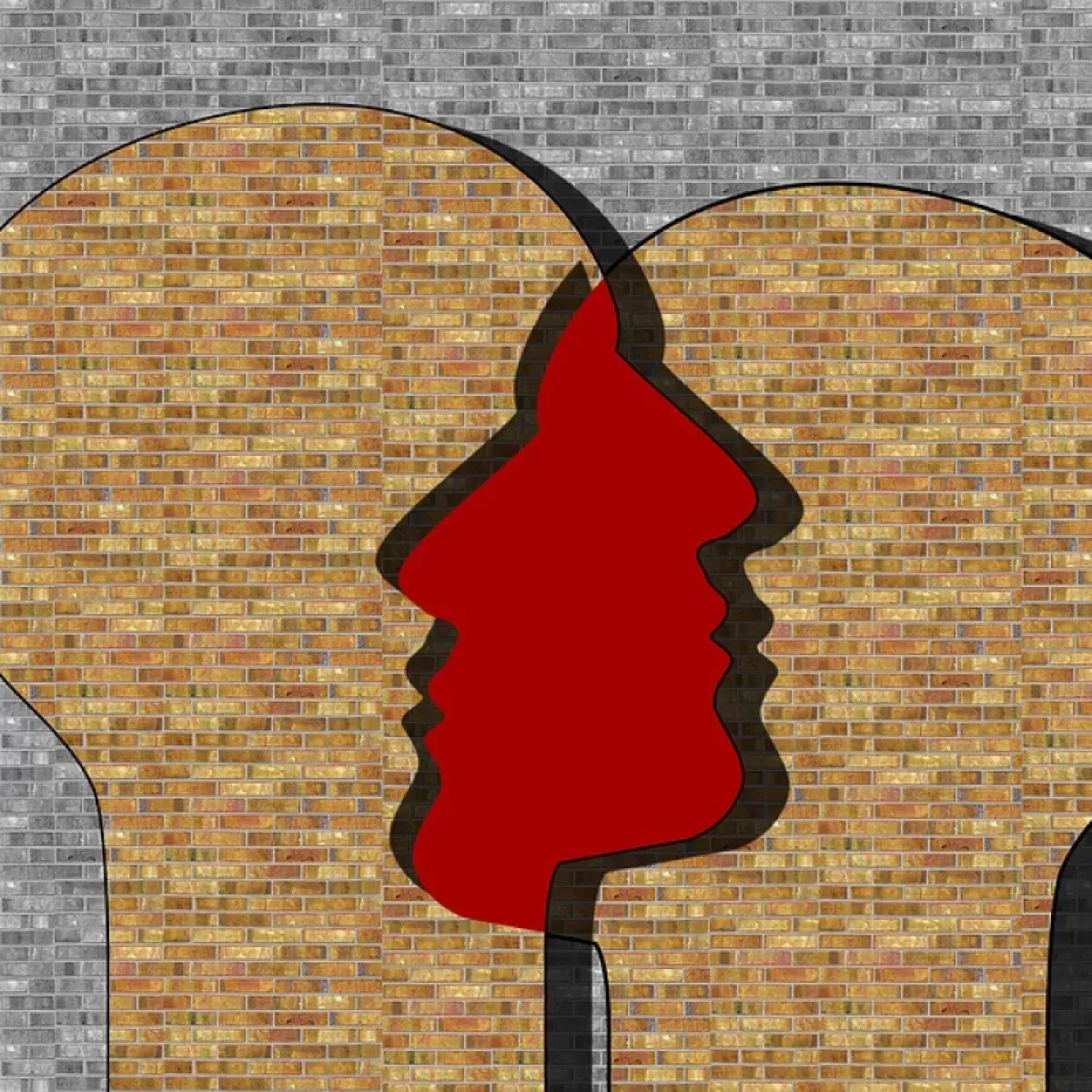
Have you ever handed a fact– fact, solid and evidenced–to a person and watched him take the extra step with his opinion to which, after all, he was already committed? They do not switch their mind but defend them even further. In case that appears all too familiar, you will not be alone. This is the peculiarity of obviative reaction in the very heart of the human non-acceptance of facts, and it is more human than we may like it to be.
We consider ourselves to be rational and liberal minds. But psychology tells it differently. In the majority of cases, when we do not believe it is only a thought, we internalize it. It may also be hard to refute them, and it appears to be a personal blow. The examples of psychology of belief perseverance and cognitive dissonance can be applied to explain what is really going on behind the scenes. We must unravel what causes people to believe in things, but reality is knocking at the door, screaming.
Beliefs are not simple thoughts, but they are an Identity
One of the major reasons why people resist facts is that beliefs are likely to be mixed with identity. Political beliefs and selection of life, religion, ideas about health, and technology may all appear extremely personal. When an individual questions them, it is as though he questions you.
This bond is employed in the psychology of belief perseverance to discuss why people continue to believe in something, although they were proven wrong regarding the rationale of why they believed in it. It is not steady to have a belief in your story, particularly the statement, this is ‘who I am’.
Consider: Changes in a belief may always suggest that a person has to admit that he or she was wrong. That, to the greater part, is worse than refusing to admit the truth.
Cognitive Dissonance: The constructed alarm system in the mind
We are uncomfortable when our values are challenged by the world around us which is referred to as cognitive dissonance
the term that was given the name by Leon Festinger. Simply put, our brain does not want to have two divergent thoughts at the same time.
The prototypical cognitive dissonance examples bear this fact out:
- A smoker who knows it is not that good yet does it.
- An individual who lacks faith in science but takes modern medicine.
This is a person who values verisimilitude and justifies lying under certain conditions. In response to this cognitive strain, the respondents are more likely to ignore or redefine the new information rather than to make changes in their beliefs. It is among the main processes due to which people are inclined to resist factual information, even to such facts which are self-evident.
The Emotional Satisfaction in Being Right
The fact not only rivals the beliefs but also the emotions. And emotions usually win. The emotions are applied in the perseverance of beliefs, a belief that is used as a glue to hold beliefs. Being “right” feels safe. One can also feel embarrassed, threatened, or ashamed when something is wrong. So, the mind is in search of short-cuts: dismiss the source, undermine the motive, or cherry-pick information that supports what you believe.
That is why cognitive dissonance examples are often duly associated with rationalization. We don’t say, “I’m wrong.” We tell that, that is a biased study, or that is not applicable to me.
It is not lying, but self-defense.
The Social Belonging Is More Than Truth
The other reason why people resist facts is social pressure. Things we believe in hold us together as groups, families, cultures, and as online communities. To alter your thoughts is risky because you can find yourself being rejected by society.
When a belief perseverance psychology comes in, it appears that it is more significant to stay with your group than to be right. Identification with your people implies belongingness, shelter, and affirmation. This may be detrimental to facts that cause the threat to such a bond.
This is what has led to the fact that cognitive dissonance examples may be readily traced in polarized areas like politics, fandoms, or arguments on social media. This is not to think that you believe it alone, but because it is a shared belief. One can find it challenging to resist it since it might appear as betrayal.
The Internet is more comfortable with belief defense
Modern media accentuates the problem of the fact resistance of people. Algorithms are useful to us, and this is what confirms our prior view. This eventually becomes an echo chamber wherein anyone who has even superficially different views seems not only to be wrong, but ridiculous.
These spaces turbocharge the belief perseverance psychology. One need not question when people who are in the immediate environment agree. And in differentiating evidence approaches, it is more easily avoided than reconsidered. The cognitive dissonance examples on the internet comprise comment wars, screenshot evidence, and defensive sarcasm. It is not knowledge- it is about competition.
Smart People Are Not Immune
One of the sordid realities: that it is no protection against belief defense to be clever. In fact, intelligent people can prove to be more helpful regarding the justification of beliefs. Belief perseverance psychology indicates that as the level of reasoning ability increases, current opinions can be defended, but not changed. That is why people resist facts; they are not concerned with ignorance but are concerned with motivation. This is because we use logic, not to judge, but to defend as a lawyer.
So, Can Minds Actually Change?
Yes–but rarely through force.
Nothing can be compared with the lesson of why people resist facts, which is that confrontation is normally counterproductive. Rebel change in belief is typically a gradual process that is denoted by faith, inquisitiveness, and emotional protection.
The best method to minimize cognitive dissonance examples would not be yelling facts, but asking questions. It is making room where one can revise their faith without being disgraced or having to be an outcast.
Knowledge of belief perseverance psychology does not necessarily explain other people, but it enables us to examine ourselves. As the unpleasant fact is that we all have a case to make in the defense of beliefs that are worth a second consideration.
It is not the difficulty of coming to grips with new facts. It is agreeable that it is not weak to be wrong, but it is human.