
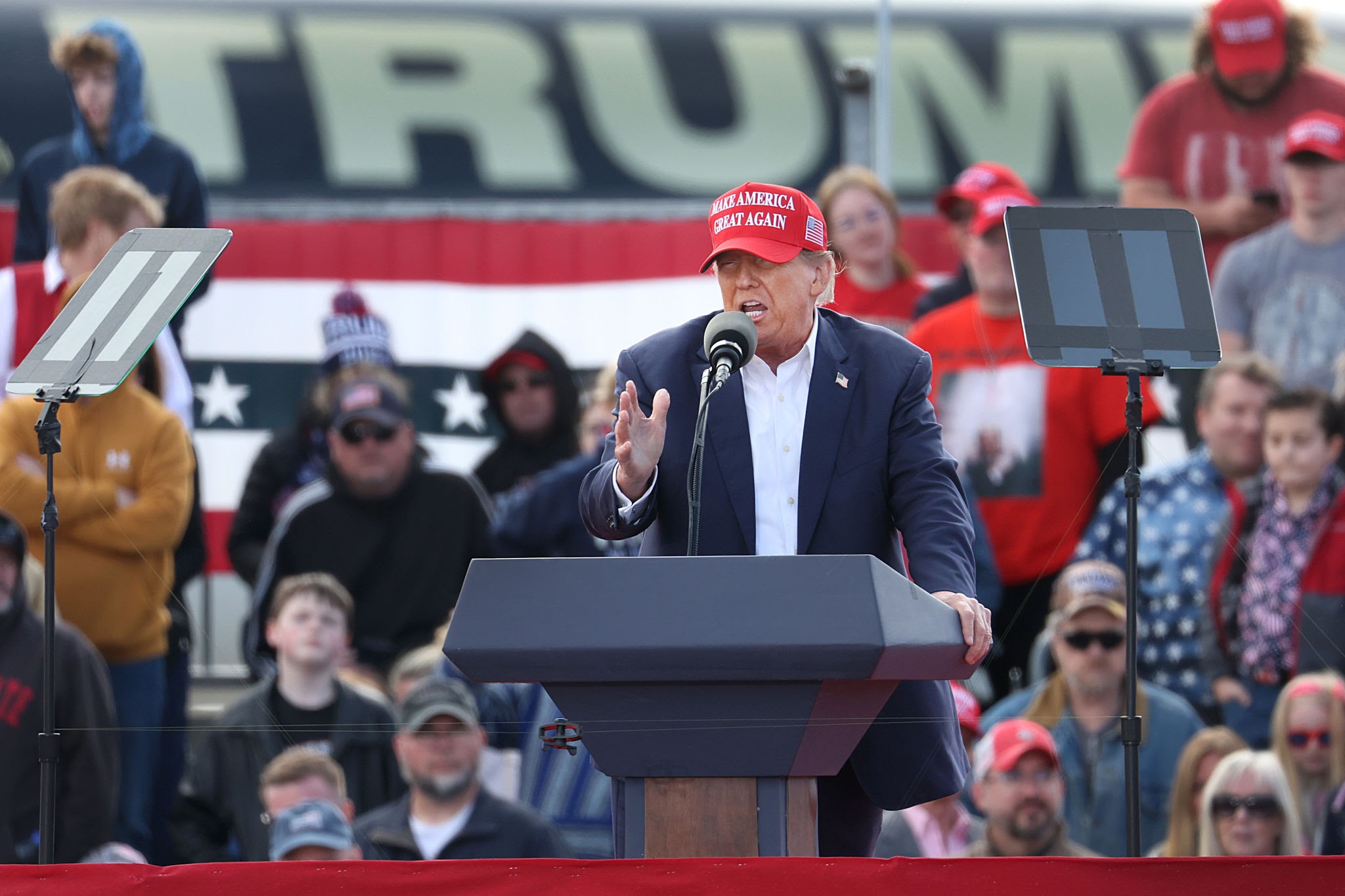
The last 12 months were like a wrecking ball. As we stand at the end of May 2026, the dust is still violently unsettled from a year of unprecedented executive overreach and administrative chaos. Over the past twelve months, the Trump administration has unleashed a dizzying, relentless barrage of executive orders, proclamations, and regulatory reversals. The goal, packaged and sold by the White House as a populist mandate to “reform the Government root and branch,” has instead manifested as a systematic dismantling of institutional guardrails, economic stability, and fundamental worker protections.
To analyze the last year of the Trump presidency is to observe a masterclass in institutional demolition. Through a combination of draconian immigration policies, the aggressive politicization of the civil service, and a brazen corporatist agenda disguised as working-class advocacy, the administration has spent the last year governing not by consensus, but by fiat. This is not a drain of the swamp; it is a hostile takeover of the American administrative state, leaving an eroded democracy and an increasingly volatile economy in its wake.
The Politicization of the Civil Service
Perhaps the most insidious damage inflicted over the past twelve months has been the quiet, systematic purge of the federal workforce. In February 2026, the Office of Personnel Management (OPM) finalized the rescission of vital civil service protections, fully realizing Trump’s notorious “Schedule F” vision via Executive Order 14171. This was not merely a bureaucratic shuffle or an exercise in “optimizing” government efficiency—it was a targeted, ideological purge designed to hollow out the expertise that keeps the federal government functioning.
By aggressively lowering the barrier to reclassify civil servants, the administration effectively stripped thousands of federal employees of their right to appeal dismissals, transforming a merit-based, nonpartisan civil service into an at-will political patronage system. The so-called “President’s Management Agenda,” which proudly brandishes the deeply partisan mandate to “Eliminate Woke, Weaponization, and Waste,” operates as a thinly veiled mechanism to replace career experts with political loyalists. When independent researchers, climate scientists, and economic analysts can be fired simply for producing data that contradicts the President’s narrative, the very foundation of evidence-based policymaking crumbles. The administration has successfully engineered an echo chamber funded by the American taxpayer, prioritizing absolute obedience over competence.
The H-1B Extortion and the Xenophobic Crusade
The administration’s anti-immigrant rhetoric reached a fever pitch in the latter half of 2025, culminating in policies that have fundamentally handicapped American innovation and global standing. In June 2025, Presidential Proclamation 10949 established staggering travel bans on 19 separate countries—a move that fractured families, disrupted international academia, and alienated critical geopolitical allies under the broad, nebulous guise of “national security.”
But the most economically destructive and glaringly punitive move came in September 2025. Through a sweeping Presidential Proclamation, the administration restricted the entry of H-1B specialty occupation workers by imposing an exorbitant, punitive $100,000 fee per petition on employers. Framed as a robust defense of the domestic workforce and a strike against IT outsourcing firms, this extortionate tariff on human capital has instead triggered a massive brain drain.
The tech industry, healthcare systems, and advanced engineering sectors rely heavily on the global talent pool to maintain America’s competitive edge. By effectively pricing out start-ups, mid-sized tech firms, and research institutions from hiring top-tier global talent, the administration has handed the future of technological dominance directly to nations like Canada, the UK, and China. It is a profound act of economic self-sabotage, driven entirely by a desire to appease a nativist political base while ignoring the catastrophic long-term consequences for American innovation.
The Populist Facade and Corporate Deregulation
If there is a defining hypocrisy of the last twelve months, it is the glaring disconnect between the administration’s working-class populist rhetoric and its aggressive, corporate-first deregulation agenda. The administration has systematically torn down the guardrails designed to protect the very workers it claims to champion.
In February 2026, Trump’s newly reconstructed Federal Trade Commission (FTC) officially rescinded the Biden-era ban on noncompete clauses. Under the cynical guise of “aligning regulations with court decisions,” the administration handed immense, coercive power directly back to corporate conglomerates. By reinstating noncompete clauses, the administration has actively trapped millions of low- and middle-wage workers in stagnant jobs, suppressing wages and suffocating the entrepreneurial mobility of the American workforce. A true pro-worker administration does not legally bind a fast-food worker or a mid-level manager to a hostile employer, yet the Trump FTC rushed to ensure corporate monopolies retained this leverage.
The anti-consumer crusade did not stop there. The administration systematically attacked the “Click to Cancel” negative option rules, which were designed to protect everyday consumers from deceptive, predatory subscription traps. Simultaneously, the Environmental Protection Agency (EPA) was weaponized to serve industrial polluters. In October 2025, a presidential proclamation granted a sweeping two-year exemption for specified copper smelters from the EPA’s National Emission Standards for Hazardous Air Pollutants. By sacrificing the air quality and health of local communities to pad the profit margins of mining conglomerates, the administration proved exactly who it serves.
Trade Chaos and the Tariff Treadmill
The economic whiplash of Trump’s transactional, chaotic approach to international trade continues to batter American markets. In November 2025, the administration announced the Kuala Lumpur Joint Arrangement, modifying reciprocal tariffs with China. While the reduction of the ad valorem rate on Chinese products from 20% to 10% and the suspension of certain agricultural tariffs were touted as massive diplomatic victories, they were merely temporary band-aids on self-inflicted wounds.
The administration’s trade policy operates less like a coherent economic strategy and more like a volatile extortion racket. American farmers, manufacturers, and supply-chain logistics coordinators have been subjected to an exhausting, unpredictable tariff treadmill, where policies shift radically based on executive whims rather than market realities. The constant threat of sudden tariffs, layered on top of bizarre, localized executive orders regarding digital marketplaces and “Made in America” labeling requirements, has created an environment of profound uncertainty. Businesses cannot invest in long-term infrastructure when the rules of global commerce are entirely dependent on the President’s daily mood.
Bizarre Frontiers and Misplaced Priorities
While the administration actively dismantled civil service protections and disrupted global supply chains, it also funneled executive energy into deeply bizarre, niche obsessions that starkly highlight a disconnect from the immediate needs of the American public.
In December 2025, amid a looming crisis in domestic housing affordability and childcare funding gaps, President Trump signed the “Ensuring American Space Superiority” executive order. This sweeping directive mandated the deployment of nuclear reactors on the moon by 2030 and aggressively pushed for the commercialization of orbital pathways. While space exploration remains a vital national interest, the obsession with lunar nuclear reactors and space-based weapons systems feels profoundly dystopian when juxtaposed against the administration’s simultaneous efforts to defund domestic regulatory bodies and rescind basic social safety nets.
Similarly, an April 2026 executive order on mental health pushed an aggressive agenda to accelerate the scheduling and regulatory pathways for psychedelic drugs. While medical research into psychedelics holds legitimate promise for treatment-resistant conditions, the initiative bypassed standard FDA rigor, raising serious concerns among medical ethicists about the administration’s willingness to shortcut scientific protocols for quick political wins.
A Legacy of Erosion
Over the past twelve months, the Trump administration has not governed so much as it has ruled by decree. From the aggressive purging of the federal workforce to the imposition of a $100,000 penalty on technological innovation, the policies enacted since the summer of 2025 paint a deeply troubling picture.
The administration has proven itself to be fundamentally hostile to the mechanisms of democratic accountability. By explicitly targeting diversity, equity, and inclusion initiatives in federal contracting, rolling back environmental safeguards, and weaponizing the Department of Justice against perceived political enemies, the White House has fostered a culture of retribution and regression.
The damage inflicted over these 12 months cannot be easily quantified by market fluctuations or unemployment tickers alone. The true cost of this era lies in the severe erosion of public trust, the politicization of independent agencies, and the deliberate polarization of American society. As we look ahead, the wreckage left by this year of unchecked executive power serves as a grim testament to the fragility of our institutions. The Wrecking Ball has swung freely, and it is the American people who are left to stand amid the rubble.
A Merged Insight Exclusive.