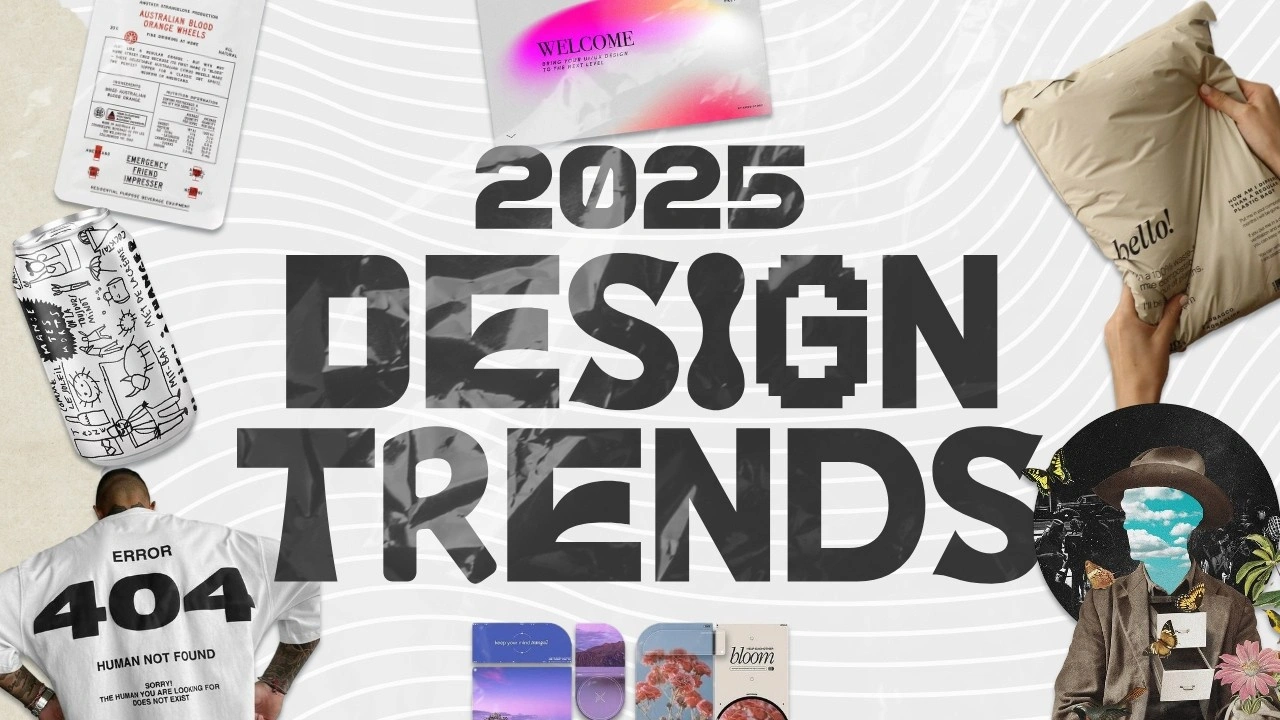
The year 2025 will be remembered for taking up a design personality that was expressive and fun. We observed that while more might be magical when skillfully curated, less can sometimes be greater when done with bold intent.
Designers finally defied convention after years of restrained minimalism, subdued color schemes, and “safe” imagery, and consumers embraced it.
From social content to brand identities and digital products, here are some design trends that stood out in 2025.
AI Became a Co-creator
Technology influenced designs in 2025. The incorporation of AI tools in the design process was arguably the biggest game-changer.
For example, graphic designers use AI more for projects, including the production of AI-driven art assets, generating design variations, and making fast mockups. AI evolved into a creative assistant that excelled at generating ideas and managing repetitive production tasks.
The increased use of technology was also evident in visual trends, as future interfaces and AR/VR components began to appear in designs.
Enhanced Visual Elements
In 2025, text was more than a string of words; it was an experience. Oversized typefaces, distorted letterforms, curved headlines, and typography evolved from a supporting role to a crucial visual component. Brands infused personality, emotion, and humor into their message.
Motion Graphics Went Beyond Aesthetics
Motion design enhanced usability and told tales through micro-animations and dramatic transitions.
In 2025, motion graphics became an essential technique for increasing brand engagement in addition to being aesthetically appealing. It made brands feel alive and responsive to the fast-moving world.
According to Canva’s design predictions, dynamic images would improve storytelling on social media and other platforms, producing more captivating content that appeals to audiences.
Maximalism Made A Flashy Return
Maximalism made a roaring comeback in 2025. This was necessitated by the designers’ need to find a thrilling visual language. To put it boldly, maximalism stood out where minimalism failed.
The trend brought out the art of “more is more†to curate exciting designs with vitality. In digital and graphic design, maximalism meant defying the norm.
Brands combined illustrations, patterns, and creative layouts to stand out in the competitive digital world. The outcome was a variety of design domains, from interior deco to interactive interfaces.
Retro-Futuristic Designs Converged
2025 saw designers draw inspiration from the past. Pixel art, early video games, web design from the 1990s, and analog textures are examples of retro-futuristic aesthetics that made a resounding comeback.
Sleek interfaces were combined with grainy overlays, and modern UX was combined with vintage graphics. The outcome tapped into emotion, creating a feeling of familiarity and innovativeness. This trend was successful because it struck a balance between modern design and nostalgia.
The Rise of Dopamine Decor
Ever heard of colors that evoke feelings? Dopamine decor is loosely defined as decorating your space with eye-catching hues, colorful patterns, and unique elements that genuinely make you feel good.
This decor, especially in interior design, focused on creating happy, mood-enhancing surroundings. Moody color schemes, such as rich browns, dark teals, and deep purples, were used to generate contrast and emotional depth. As designers favored strong, expressive color choices, neutral palettes became less popular.
Hybrid Designs Took Center Stage
The emergence of hybrid design trends that purposefully combined the calmness of minimalism and the vitality of maximalism came to the fore in 2025. Interior designers coined words like “minimalism†to describe works that balanced the two trends.
We also observed this fusion in graphic design, which some have dubbed minimalist maximalism designs. They appear minimal at first, but a closer look reveals maximalist features.
These hybrid designs also gave birth to a new version of brutalist design. In this layout, designers combined bold typography with unconventional designs. The final product brought out the edgy, confident side of brands while maintaining clarity.
The Future of Design
The design landscape of 2025 was diverse and rich. Apart from the interplay between minimalism and maximalism, technological advancements and social values also shaped design trends.
The combination of these elements made 2025 a fascinating year, with designers drawing inspiration from both the past and the future.
In a nutshell, 2025 exhibited that both discipline and dynamism are necessary for design to flourish. Maximalism provided us the enthusiasm to convey meaning, while minimalism gave us the framework to express it.
The future of design looks bright as minimalism and maximalism are set to combine forces, bringing out a unique and elaborate style.