
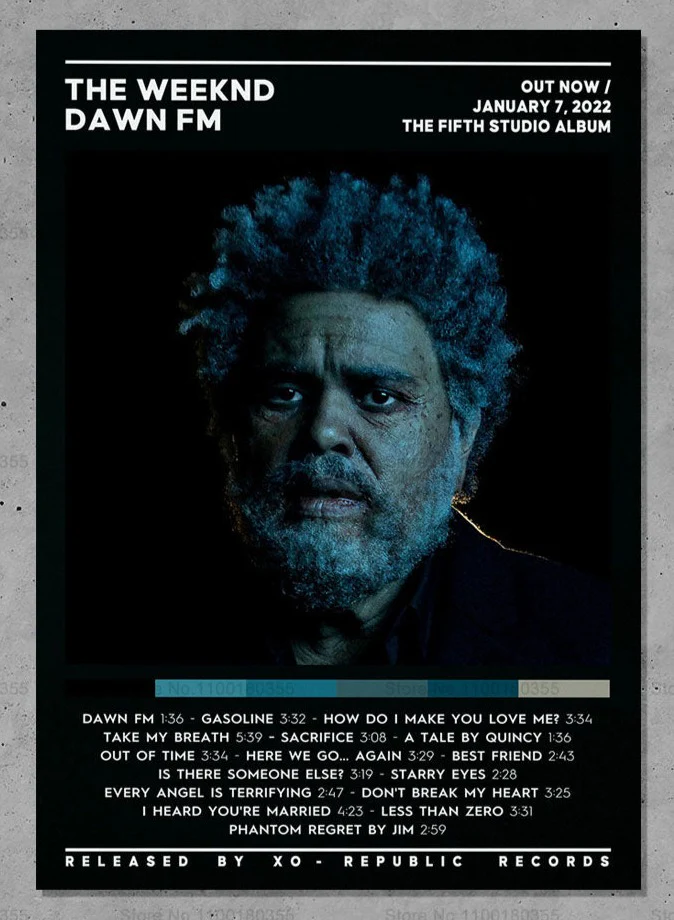
If After Hours was the chaotic, blood-soaked descent into the neon-lit underworld of fame and excess, Dawn FM is the morning after—only you haven’t woken up. Instead, you find yourself sitting in the sterile, fluorescent waiting room of purgatory, and the only thing playing over the speakers is a retro-futuristic radio broadcast. Here at Merged Insight, we’ve been dissecting the intersection of culture, art, and the sonic architectures that define our era. With Dawn FM, Abel Tesfaye hasn’t just released a pop record; he has constructed an immersive, multi-disciplinary audio-world that deserves every rose we can throw at its feet.
This is an album that demands to be experienced not as a playlist, but as a conceptual, narrative-driven journey. It is a masterpiece of synthetic pop that looks backward to the electronic pioneers of the 1980s while simultaneously hurtling toward a polished, digitized future.
Broadcasting from the End of the World
The brilliance of Dawn FM lies in its relentless commitment to its own premise. The listener is dead—or at least transitioning—and the soundtrack to this liminal space is 103.5 Dawn FM. Guiding us through the existential dread is the soothing, ironically commercial voice of actor Jim Carrey, who serves as the spectral DJ. Carrey’s presence anchors the album’s overarching philosophy: to move forward into the light, you have to let go of the trauma, the hedonism, and the toxic cycles of the past.
It is a fascinating narrative device that turns a collection of synth-heavy tracks into an intellectual exploration of party hauntology—the lingering ghost of our cultural past haunting our present. The Weeknd isn’t just making an 80s tribute album; he is using the polished, upbeat sounds of new wave, funk, and electro-pop to mask a deep, pervasive melancholia. The juxtaposition is jarring and brilliant. The upbeat rhythmic melodies trick the body into moving, while the lyrical substance forces the mind to confront its own shadows.
The Architecture of Synthetic Melodies
Sonically, Dawn FM is a triumph of futuristic production. Collaborating with heavyweights like Max Martin and Daniel Lopatin (Oneohtrix Point Never), The Weeknd merges commercial pop sensibilities with experimental, synthetic textures.
Consider a track like “Gasoline.†It opens with an undulating, eerie synthline before Tesfaye drops into an unexpected, affected vocal register that sounds completely detached, embodying the numbness of his nihilism. Yet, the chorus explodes into a glittering, dancefloor-ready hook. It’s a masterclass in tension and release.
Then there is “Take My Breath,†a sprawling, Giorgio Moroder-esque odyssey that pulses with the urgency of a ticking clock. The rhythmic melodies are tight, syncopated, and perfectly engineered. The transition from the Quincy Jones interlude into the butter-smooth, city-pop sampled “Out of Time†stands as one of the most elegant sequences in modern R&B. Tesfaye’s vocal performance here is among his finest—vulnerable, crystal clear, and steeped in genuine regret. He replaces the destructive bravado of his past work with a desperate plea for redemption.
Confronting the Ghosts of the Past
At the core of this publication’s ethos is a deep appreciation for narratives that push boundaries. Dawn FM succeeds because it allows its protagonist to evolve. The “Weeknd†character has spent over a decade singing about the self-inflicted wounds of drugs, temporary lovers, and emotional unavailability. But on this record, the bill finally comes due.
In “Less Than Zero,†arguably the emotional climax of the album, Tesfaye delivers a heartbreaking admission of his own inadequacies over a buoyant, acoustic-driven synth beat that wouldn’t feel out of place in a John Hughes film.
“I couldn’t save you from my darkest truth of all / I know I’ll always be less than zero”
It is a devastating confession wrapped in a euphoric melody. The album is fundamentally about the struggle to forgive oneself when the party finally ends, and the lights come on.
Giving The Weeknd His Roses
Dawn FM is a rare achievement in contemporary music. It is a wildly successful pop record that refuses to sacrifice its thematic integrity for the sake of an easy hit. The Weeknd has curated a listening experience that is as cohesive as it is infectious. He has blended the cold, synthetic precision of electronic music with the warm, bleeding heart of traditional R&B, creating a soundscape that feels both nostalgic and aggressively modern.
Here at Merged Insight, we evaluate art not just by how it sounds, but by what it attempts to build. With Dawn FM, Abel Tesfaye built a world. He engineered a purgatory that we actually want to dance in. For his ambition, his immaculate execution, and his willingness to mature a persona that could have easily remained stagnant, we give The Weeknd his flowers. Dawn FM isn’t just an album you play; it’s a broadcast you tune into—and we suggest you stay locked on the dial.
A Merged Insight Exclusive.