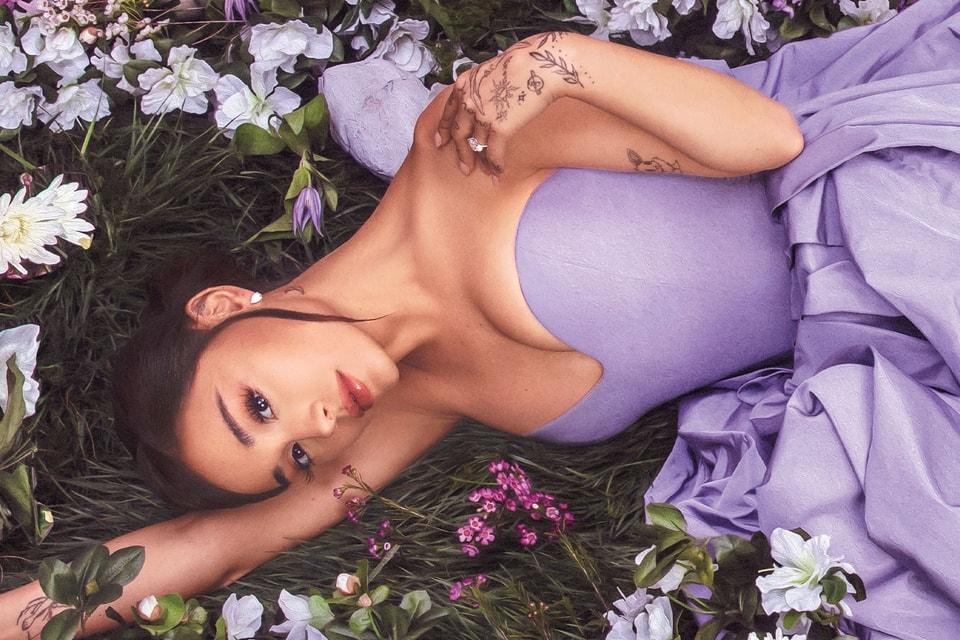
Ariana Grande is no longer just defending her chart-topping status; she is fighting a literal and metaphorical war for the one commodity that fame seemingly cannot buy: her privacy. For over a decade, the Grammy-winning pop titan has surrendered her art, her image, and her extraordinary voice to the world. But the world, it seems, has never been satisfied with just the art. Now, in a definitive and explosive turning point in her career, Grande has declared war on the shadowy network of hackers, invasive agencies, and the deeply entrenched cultural entitlement that has relentlessly commodified her private life and personal health.
This is not a battle fought solely in the court of public opinion. It is a multi-front conflict being waged in the Los Angeles County Superior Court, on social media platforms, and within the deeply toxic parameters of modern celebrity culture. From fighting back against egregious cyber-intrusions that pillaged her unreleased music, to taking a devastatingly vulnerable stand against the relentless policing of her physical body, Grande is drawing a line in the sand. The message is unequivocal: her boundaries are no longer up for negotiation.
The Legal Frontline: Suing the Shadows
The most tangible escalation in Grande’s war for privacy arrived in late July 2026, when her legal team filed a sweeping, unprecedented lawsuit in Los Angeles against a syndicate of unidentified hackers, named in the filing as “John Does 1 through 100”. This was not a routine cease-and-desist; it was a comprehensive legal assault against an invisible enemy that has terrorized her inner circle for years.
The complaint outlines a deeply disturbing pattern of digital espionage. These hackers did not simply guess a password; they orchestrated a sophisticated, sustained campaign of phishing and cyber-stalking targeted not just at Grande, but at the vulnerable links in her professional chain—the producers, digital technicians, and photographers she trusts. By impersonating industry professionals and spoofing email domains, these malicious actors breached Dropbox accounts and personal hard drives to siphon away years of private material.
The sheer volume of the theft is staggering. According to the lawsuit, in 2023 alone, an astonishing 45 unreleased songs were hacked, stolen, and leaked to the dark web and eventually to public forums. And the violations did not stop at audio files. The complaint details the theft of still-in-production masters, behind-the-scenes video footage, album outtakes, and profoundly private photographs that were never intended for public consumption. The stolen assets were subsequently monetized, sold in batches through platforms like Cash App and PayPal to fans hungry for unreleased content.
For years, the music industry has treated leaks as an unfortunate byproduct of the digital age, a “cost of doing business.” But Grande’s lawsuit shatters this passive acceptance. Her legal team characterized the hacks as a “sustained assault on her privacy and creative work,” labeling the conduct “unlawful and egregious”. The lawsuit cites invasion of privacy, conversion (the civil equivalent of theft), and violations of California’s computer hacking statutes. By forcing the perpetrators into the light through subpoenas served on internet service providers, Grande is seeking not just financial restitution but a restoration of her creative autonomy. She is demanding that the digital agencies and rogue individuals who treat her life as open-source code be held accountable for the psychological and economic havoc they have wreaked.
The Anatomy of a Leak: A Violation, Not a Gift
To fully understand the gravity of Grande’s legal battle, one must examine the toxic ecosystem that fuels it. When a pop star’s music leaks, a vocal subset of the internet often frames it as a “gift” to the fandom. They consume the raw, unfinished demos with a sense of entitlement, arguing that because they support the artist, they deserve access to the artist’s cutting-room floor.
Grande’s lawsuit obliterates this narrative. It explicitly states that these leaks cause “substantial and irreparable harm” to the “direct and sacred relationship” she holds with her audience. When unfinished work is ripped from a creator’s hands, it strips them of their agency. It disrupts the release schedules of meticulously planned projects and forces the artist into a state of perpetual anxiety. Imagine spending months crafting a deeply personal piece of art, only for a faceless entity to shatter your studio window, steal your canvas, and sell it to the highest bidder before the paint has even dried. It is an invasion of the mind and the sanctuary of the studio. Grande’s decision to pursue this legally is a defiant rejection of the idea that a public figure owes the public the contents of her private hard drives.
The Second Front: Health Privacy and Bodily Autonomy
While the cyber-hacks represent a violent intrusion into her professional privacy, Grande has been simultaneously fighting an arguably more exhausting war: the battle for her physical and health privacy. In a society that equates visibility with ownership, female pop stars are frequently subjected to forensic analysis of their bodies. For Grande, this scrutiny reached a fever pitch in the spring of 2023, forcing her to address the public in a raw, profoundly vulnerable moment that exposed the ugly underbelly of parasocial relationships.
After photos surfaced of Grande looking thinner than the public was accustomed to, the internet erupted in a chorus of “concern.” Tabloids, social media commentators, and so-called fans began intensely diagnosing her from afar, dissecting her bone structure, her weight, and her overall health. This insidious practice, often veiled as “caring,” is an aggressive form of boundary violation. It demands that a woman publicly justify the state of her own physical vessel to millions of strangers.
In April 2023, Grande did something she rarely does: she turned on her camera and addressed the speculation directly on TikTok. Sitting quietly with a cup of coffee, she dismantled the public’s misguided assumptions with devastating clarity. “I just wanted to address concerns about my body and talk a little bit about what it means to be a person with a body and to be seen and to be paid such close attention to,” she said.
Her message cut to the core of health privacy. She revealed a painful truth that exposed the sheer hypocrisy of the public’s judgment. “The body that you’ve been comparing my current body to was the unhealthiest version of my body,” she confessed. “I was on a lot of antidepressants, drinking on them, eating poorly, and at the lowest point of my life when I looked the way you consider ‘my healthy'”.
This revelation was a watershed moment in the discourse surrounding celebrity health. The public had been mourning a version of Grande’s body that was secretly tethered to profound emotional and physical suffering. When she was actively healing, choosing healthier habits, and stepping away from the toxic coping mechanisms of her past, the world decided she looked “sick.”
Grande’s TikTok was an impassioned plea for basic human decency. “I think we should be gentler and less comfortable commenting on people’s bodies, no matter what,” she urged. “Even if you think you’re saying something good or well-intentioned… we should really work towards not doing that as much”. She reminded the world that a photograph is merely a frozen fraction of a second, completely devoid of the invisible context of a person’s life. You never know what someone is going through.
By weaponizing their “concern,” the public was inadvertently demanding access to her confidential medical history. Grande’s gentle but firm pushback was a declaration of bodily autonomy. She refused to let her health be a trending topic, demanding that the public surrender its false sense of jurisdiction over her physical form.
The “Wicked” Scrutiny and the Surveillance State
The intersection of these two wars—digital theft and physical scrutiny—has only intensified during Grande’s monumental undertaking as Glinda in Universal’s cinematic adaptation of Wicked. While filming in the UK, the production was plagued by invasive paparazzi tactics. Helicopters routinely circled the outdoor sets, utilizing long-lens cameras to capture her costumes, her expressions, and her private interactions between takes.
This relentless surveillance functions as an extension of the same entitlement that drives the hackers and the body-shamers. It is a unified cultural refusal to allow Ariana Grande to exist offline, out of frame, or in private. The agencies that dispatch paparazzi to hover over movie sets operate on the same philosophical wavelength as the hackers who phish her producers: they believe that because Grande is famous, her image and her work are public property, ripe for extraction and exploitation.
But the psychic toll of existing under this panopticon is immeasurable. Grande has previously been open about her struggles with PTSD following the horrific 2017 Manchester Arena bombing, an event that fundamentally shattered her sense of safety in the world. To heal from trauma requires sanctuary. It requires a space where one is not perceived, judged, or hunted. The relentless hacking, leaking, and bodily scrutiny directly assault that sanctuary. Every stolen song and every invasive zoom-in on her ribcage is a reminder that the world is constantly watching, constantly taking, and constantly demanding more.
A Cultural Reckoning
Ariana Grande’s dual battles against cyber-thieves and body-shamers are not isolated incidents; they are two sides of the same counterfeit coin. Together, they represent a chilling portrait of what it costs to be a legendary female artist in the 21st century. The public demands the magic of the music, but they also want the blood, the bone, and the password to the hard drive.
But the era of passive endurance is over. With her July 2026 lawsuit, Grande has mobilized the justice system to hunt down the cyber-criminals who have plagued her career. With her raw, unvarnished public statements, she has shamed the toxic culture of bodily surveillance that masquerades as fandom.
Ariana Grande is at war, and it is a righteous one. She is fighting for the right to heal in private, to create in peace, and to exist in a body without providing a medical chart to the timeline. In a culture that ravenously consumes its idols, Grande is doing something radically brave: she is closing the door, locking it, and daring anyone to try and break it down again. And as she takes back her power, she is not just protecting her own legacy—she is writing a new rulebook for the future of privacy in the public eye.