
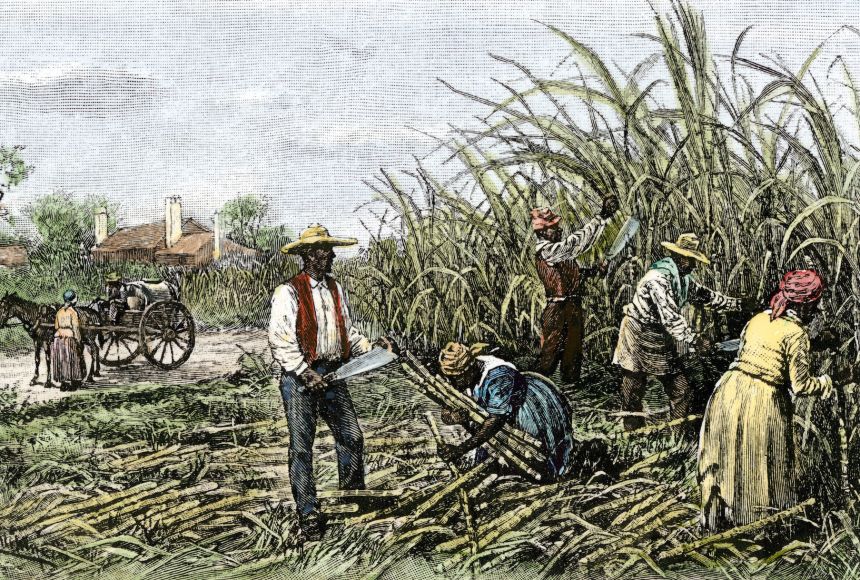
The story of the United States is often told as a tale of inevitable progress. It is framed as a journey where freedom is the destination and equality is the vehicle. However, this narrative conveniently omits the fuel that powered the engine of American prosperity for centuries. That fuel was the stolen labor and the broken bodies of enslaved African people. This is not merely a matter of historical trivia or past grievances to me. It is an active and compounding economic reality that I live with every day as a thirty-six-year-old Black man in Philadelphia. The wealth of the modern Western world was built on a foundation of chattel slavery. This creates a specific and quantifiable debt. It is a debt that has never been paid. I stand alongside millions of other Black Americans to demand what is rightfully ours. We deserve reparations not as charity but as restitution for the enslavement of our ancestors and the systemic theft that followed.
To understand why my claim is valid, you must first confront the sheer magnitude of the theft. Slavery was not simply a social evil. It was an economic system. For nearly two hundred and fifty years, enslaved people in this country were treated as capital. They were collateral for loans and assets in estate planning. They were the machinery that produced the cotton and tobacco that made the United States a global economic superpower. The labor provided by my ancestors was not given freely. It was extracted through violence. If you hired a contractor to build a house and then refused to pay them upon completion, you would be sued. The court would order you to pay the original amount plus interest. The United States used Black labor to build its national house and has refused payment for four centuries.
I view this history through the lens of my own service to this country. I am a United States Army veteran. I served for eight years, including time as a cannon crew member. I wore the uniform, and I followed orders. I was willing to put my body on the line for a nation that has historically devalued the bodies of men who look like me. When I enlisted, I entered a contract. I gave my service, and the government gave me a salary and benefits. That transaction was clear. Yet the transaction between this country and my ancestors remains unfinished. I served a nation that has yet to serve me justice for the crimes committed against my lineage. It is a bitter irony to defend a constitution that originally counted my ancestors as three-fifths of a person. My patriotism is real, but it is tempered by the knowledge that the ledger is not balanced.
Critics of reparations often argue that slavery ended long ago and that no living person owned slaves. This argument fails to acknowledge how intergenerational wealth works. Wealth is rarely created in a vacuum. It is passed down, and it compounds. When a family is allowed to keep the fruits of their labor, or they invest in land and education. They pass these assets to their children, who then have a head start. White Americans were largely able to do this. They benefited from government programs like the Homestead Act, which gave away land to citizens. This was a benefit largely denied to Black people. My ancestors started with literally nothing in 1865. They were turned out into a hostile society without land or capital. The playing field was never level. It was constructed on a gradient that funneled resources upward to one group while trapping another at the bottom.
I feel the weight of this history in my own economic life. I work hard. I am a retail clerk at Fine Wine and Good Spirits. I am a student at the University of Phoenix. I am an entrepreneur trying to build my own platforms like Merged Insight and Mecella Co. I am doing everything the American Dream demands of a citizen. I am working, and I am studying, and I am creating. Yet I am doing so without the cushion of generational wealth that so many others take for granted. When I try to launch a business, I am bootstrapping from zero. I do not have a family trust fund or a piece of inherited property to leverage for a loan. The gap between my reality and the reality of my white peers is not a result of differing work ethics. I know the value of hard work. I learned it in the Army, and I practice it every day in Philadelphia. The gap is the mathematical result of specific policy choices made over generations.
The injury did not end with the Emancipation Proclamation. If slavery was the initial theft, then the subsequent century of Jim Crow was the heist that ensured the vault remained empty. Practices such as sharecropping created a new form of servitude. Convict leasing systems criminalized Black life to provide free labor. This sabotage continued well into the twentieth century. The GI Bill helped veterans buy homes and attend college, but the administration of this bill frequently denied benefits to Black veterans. Redlining policies prevented Black families from buying homes in appreciating neighborhoods. This locked Black Americans out of the single greatest wealth-generating vehicle in American history, which is home equity. While white families were building nest eggs to pass on to their grandchildren, Black families were forced into predatory housing markets where they owned nothing.
Therefore, my claim is rooted in forensic accounting as much as it is in justice. The median wealth of a white family in the United States is multiple times higher than that of a Black family. This disparity captures the cumulative effect of unpaid labor and excluded opportunity. Reparations are the only mechanism capable of closing this gap. It is not enough to simply say that laws are now equal. If two runners are in a race and one is shackled for the first ten laps, you cannot simply remove the chains on the eleventh lap and call the race fair. The free runner has built up an insurmountable lead. To restore fairness, you must address the distance created during the time of the violation.
The argument for reparations also carries a profound psychological weight. A nation that refuses to atone for its past crimes cannot truly be whole. Germany paid reparations to Holocaust survivors. The United States paid reparations to Japanese Americans interned during World War II. These payments were acknowledgments of wrongdoing. They signaled that the state accepted responsibility for the harm it inflicted. By refusing to pay reparations to people like me, the United States is effectively stating that this specific crime does not matter. It sends a message that the suffering of my ancestors is acceptable collateral damage. For me, receiving reparations would be a recognition of my humanity and the humanity of those who came before me.
Implementing reparations would require a massive transfer of resources, but it is well within the capacity of the United States. Arguments about feasibility are often masks for a lack of political will. The government finds trillions of dollars for wars and corporate bailouts when it deems them necessary. Paying the debt owed to Black Americans is a matter of priority, not possibility. This could take many forms, including direct cash payments or grants for home ownership and business capital. The goal must be to make the descendants of the enslaved whole. It must be to provide the economic floor that was stolen from under our feet centuries ago.
I stand as a representative of a lineage that survived the unsurvivable. My very existence is a testament to resilience. But resilience should not be the only inheritance I receive. I am owed the capital that the blood and sweat of my people created. The debt is old, but the statute of limitations on morality does not expire. Until this debt is paid, the ledger of American history remains unbalanced. The demand is clear, and the justification is absolute. The United States must pay what it owes to me and the millions of Black Americans who are the creditors of this nation. Justice requires nothing less than full restitution for the sins of the past to ensure a truly equitable future.