
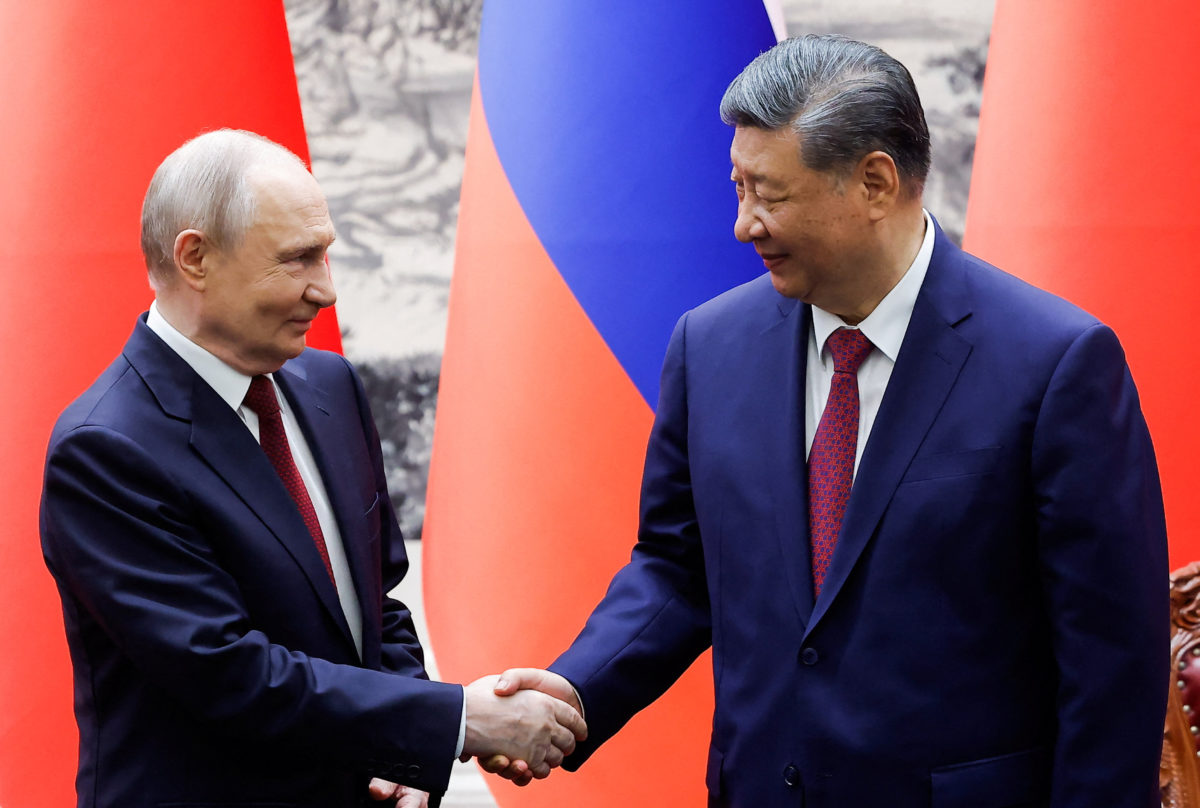
The global geopolitical landscape in 2026 is defined by a fundamental shift toward transactional foreign policy and acute supply chain fragmentation. At the center of this new era is a precarious triangular quagmire between the United States, China, and Russia.
The battle lines are not drawn with infantry, but with extreme ultraviolet lithography machines, sanctions on independent oil refineries, and shadow fleets of crude tankers. This is the defining conflict of the decade: a zero-sum scramble for the silicon that powers the future and the fossil fuels that keep the present running.
Here is a deep dive into the optics, outlooks, and underlying rationales driving this tripartite standoff—and the narrow path toward a stable equilibrium.
The Silicon Chokehold: The US-China Tech War
The foundation of the modern U.S.-China strategic competition rests on advanced semiconductors and Artificial Intelligence. Both nations operate under the conviction that whichever country dominates the AI race will secure an insurmountable economic and military advantage.
The U.S. strategy has been one of technological containment. Through a sweeping series of export controls, the Commerce Department’s Entity List, and targeted sanctions, Washington has systematically attempted to sever China’s access to the most advanced AI chips and semiconductor manufacturing equipment.
However, by mid-2026, we are witnessing a fragile “ceasefire.” Following high-level meetings between U.S. and Chinese leadership in Beijing, an unwritten truce has temporarily halted new U.S. export controls on chips. The U.S. recently cleared several Chinese firms to receive Nvidia’s H200 chips, though actual deliveries remain entangled in bureaucratic and political maneuvering.
The Rationale:
- For the U.S.: The goal is “de-risking” rather than total decoupling. Washington wants to slow Beijing’s military-civil fusion programs without entirely locking U.S. tech giants out of the lucrative Chinese consumer market. The current truce buys the U.S. time to reshore its own critical supply chains.
- For China: The tech blockades have accelerated Beijing’s drive for absolute tech sovereignty. The ceasefire provides breathing room for China’s domestic fabrication industry—like SMIC—to mature, while securing a steady flow of legacy chips needed to dominate the global EV and advanced manufacturing export markets.
The Crude Reality: Energy Sanctions and the Middle East
If silicon is the brain of the global economy, oil remains its blood. The energy dynamic in 2026 has been thrown into chaos by escalating conflicts in the Middle East and the Persian Gulf, choking off traditional oil and natural gas shipments and sending global energy prices soaring.
In response, the U.S. has weaponized its financial system. In April 2026, the U.S. Treasury slapped severe secondary sanctions on Hengli Petrochemical—one of China’s largest independent refineries—and roughly 40 shipping companies for transporting Iranian oil. China had been importing up to 90% of Iranian oil before the conflict intensified, often relying on a “shadow fleet” to obscure origins.
The U.S. calculus is blunt: cut off the revenues funding Iranian military capabilities by punishing the end-buyer. But by sanctioning Chinese entities, the U.S. is forcing Beijing’s hand, prompting a massive geopolitical pivot.
The Russian Hedge: A Marriage of Convenience
The U.S. strategy to squeeze China’s technology imports and Middle Eastern oil supply has created a massive, unintended consequence: it has pushed Beijing directly into Moscow’s waiting arms.
As Middle Eastern oil becomes a geopolitical liability for China, Russia is reaping substantial, long-term rewards. China’s national oil companies are dramatically scaling up purchases of Russian seaborne crude. The Power of Siberia 1 natural gas pipeline is operating above capacity, and Russian LNG deliveries to China saw massive annual increases through 2025 and into 2026.
The Rationale:
- For Russia: Locked out of Western financial systems and markets since 2022, Moscow’s economic survival depends entirely on pivoting East. China provides a bottomless, reliable market for Russian hydrocarbons, effectively neutralizing Western economic warfare.
- For China, Russia is Beijing’s ultimate strategic insurance policy. The deeper China integrates with Russian energy infrastructure—from the Arctic LNG 2 projects to helium exports from the Amur region—the less vulnerable it becomes to U.S. naval blockades or Middle Eastern supply shocks.
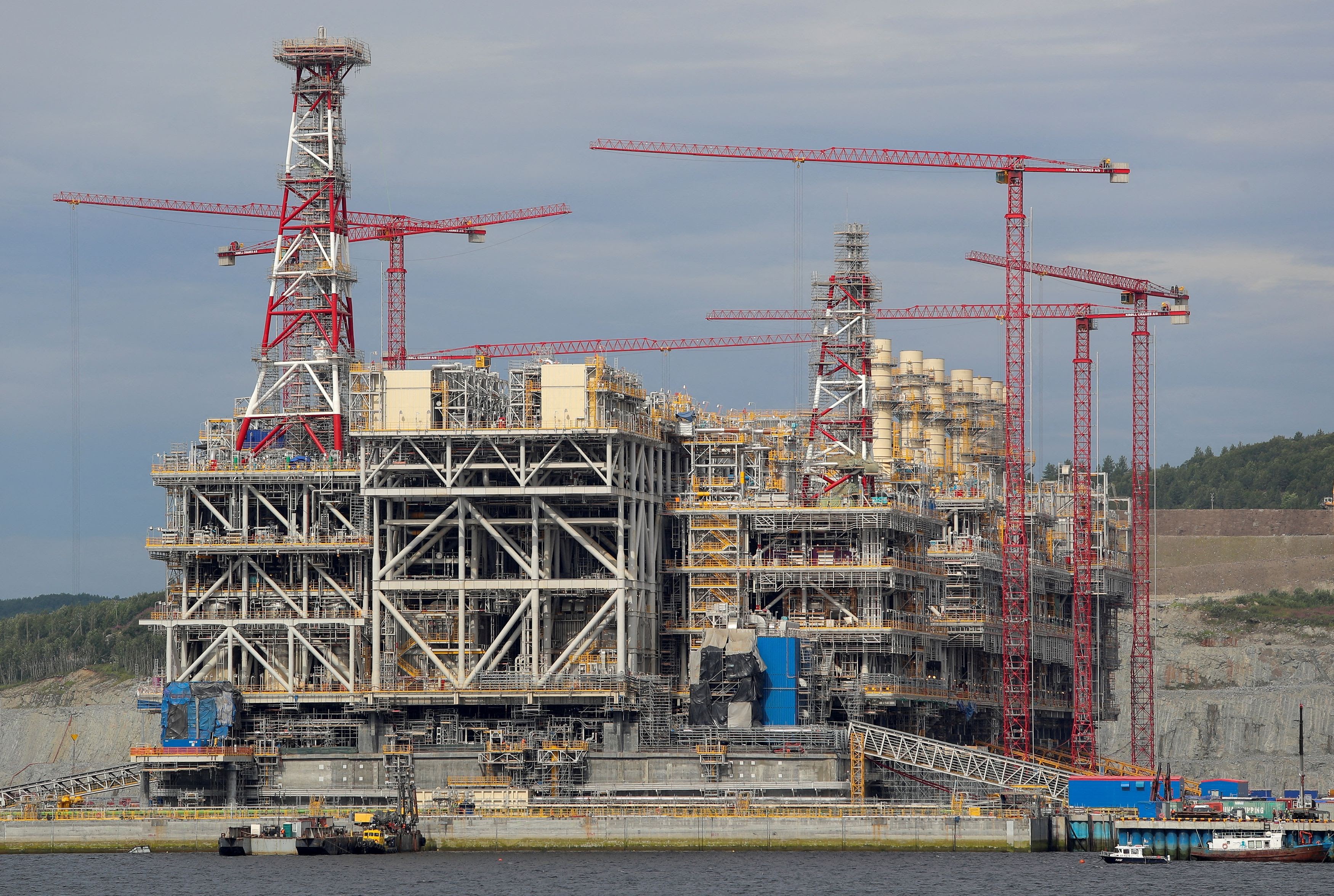
Russia’s Arctic LNG 2 project. Source: Stringer / REUTERS
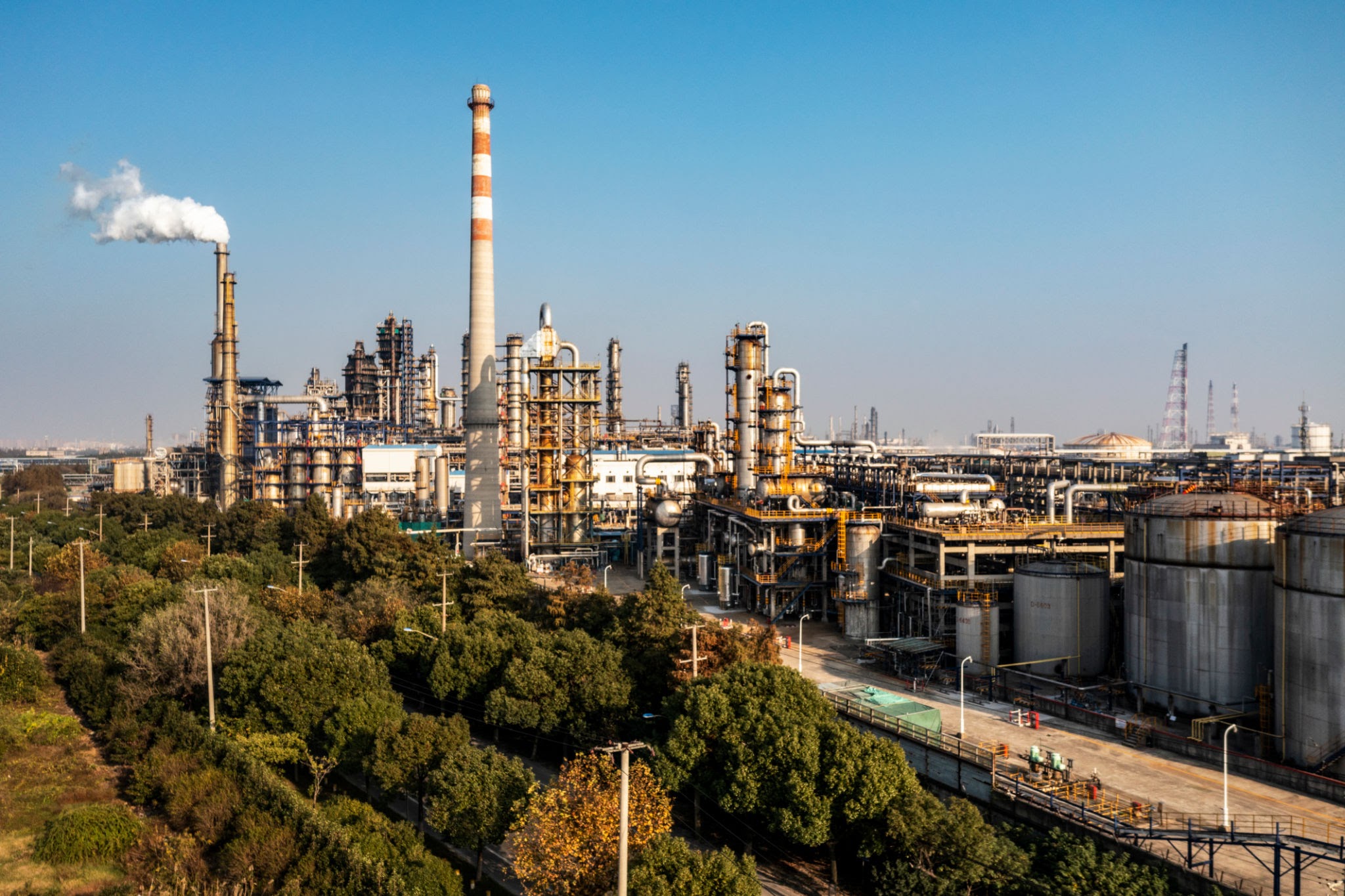
Chinese independent oil refinery. Source: owngarden / Getty Images
The Optics and the Geopolitical Outlook
To the global observer, this triangle looks like the rapid fracturing of the post-Cold War order.
- The U.S. Optic: Washington portrays its actions as the defense of the “rules-based international order,” framing export controls as national security imperatives and oil sanctions as counter-terrorism measures.
- The Chinese Optic: Beijing views U.S. policy as a coordinated containment strategy designed to block China’s rightful economic rise. In response, China emphasizes its role as a champion of the Global South, establishing alternative trade architectures (like expanding BRICS) that bypass the U.S. dollar and the SWIFT system.
- The Russian Optic: Moscow leans heavily into the narrative of a multipolar world, positioning itself as an indispensable resource superpower defying Western hegemony.
The immediate outlook is one of entrenched fragmentation. As the BlackRock Geopolitical Risk Indicator recently highlighted, the U.S. pursuit of a transactional approach to foreign policy is accelerating global divides. Supply chains are no longer optimized for efficiency; they are being rebuilt for national security and resilience.
A Potential Positive Outcome: The Pragmatic Equilibrium
Is there a way out of this zero-sum trap? A positive outcome for all parties relies on a mutual recognition of deeply entrenched codependency. Total decoupling would trigger a global depression; the goal must be managed coexistence.
Here is what a positive, pragmatic equilibrium looks like:
- Codifying the Tech Ceasefire: The current “pause” on chip sanctions must evolve into a defined, predictable framework. The U.S. achieves its core national security aims by controlling the bleeding-edge (sub-2nm nodes and quantum IP), while allowing normal commercial trade of legacy and mid-tier chips. This gives U.S. firms the revenue needed for R&D and gives China the silicon necessary to run its consumer economy without feeling cornered.
- Sanctions Relief for Energy Stability: The U.S. recognizes that forcing Chinese refineries into bankruptcy over Iranian oil exacerbates global inflation and harms U.S. consumers. A positive outcome involves the U.S. quietly granting targeted sanction waivers to key Chinese refineries in exchange for Beijing utilizing its diplomatic leverage in Tehran to de-escalate Middle Eastern proxy conflicts.
- The Green Transition as Common Ground: The ultimate off-ramp is moving past the oil quagmire entirely. While China relies on Russian oil today, it is simultaneously dominating the global buildout of solar, battery, and EV supply chains. A mutual U.S.-China understanding to lower tariffs on critical transition minerals and green technologies would accelerate global decarbonization, eventually deflating Russia’s geopolitical leverage as an energy weapon and easing the tension over Middle Eastern chokepoints.
The chips and oil quagmire of 2026 is a dangerous high-wire act. The positive outcome does not end in a grand, unified alliance, but in a cold, calculated pragmatism—where all three powers realize that the cost of completely breaking the global system is far higher than the cost of sharing it.